On this page
1. The skimmer
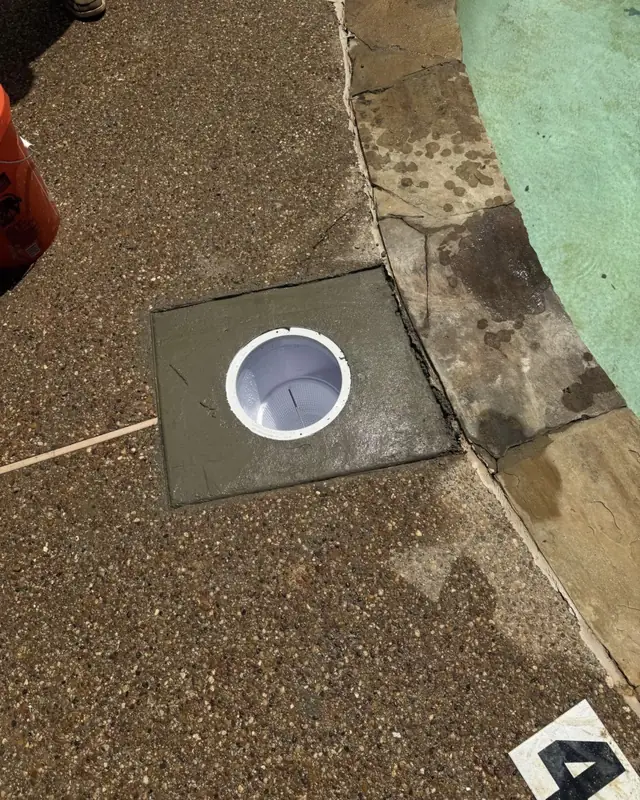
The skimmer is a plastic box set into the concrete. Where it meets the pool, the bond can crack as the ground moves. The water often stops dropping partway down the skimmer opening. More on skimmer leaks.
2. Return fittings
The jets that push water back into the pool sit in the wall. The fitting can loosen or crack where it meets the shell. Dye shows it fast.
3. The main drain
At the deepest point, out of sight. A cracked fitting or a stuck valve in the drain sump can leak, often more with the pump off. See main drain leaks.
4. The light
Water can follow the light cord through its conduit and out of the pool. The level often stops at the light. See light leaks.
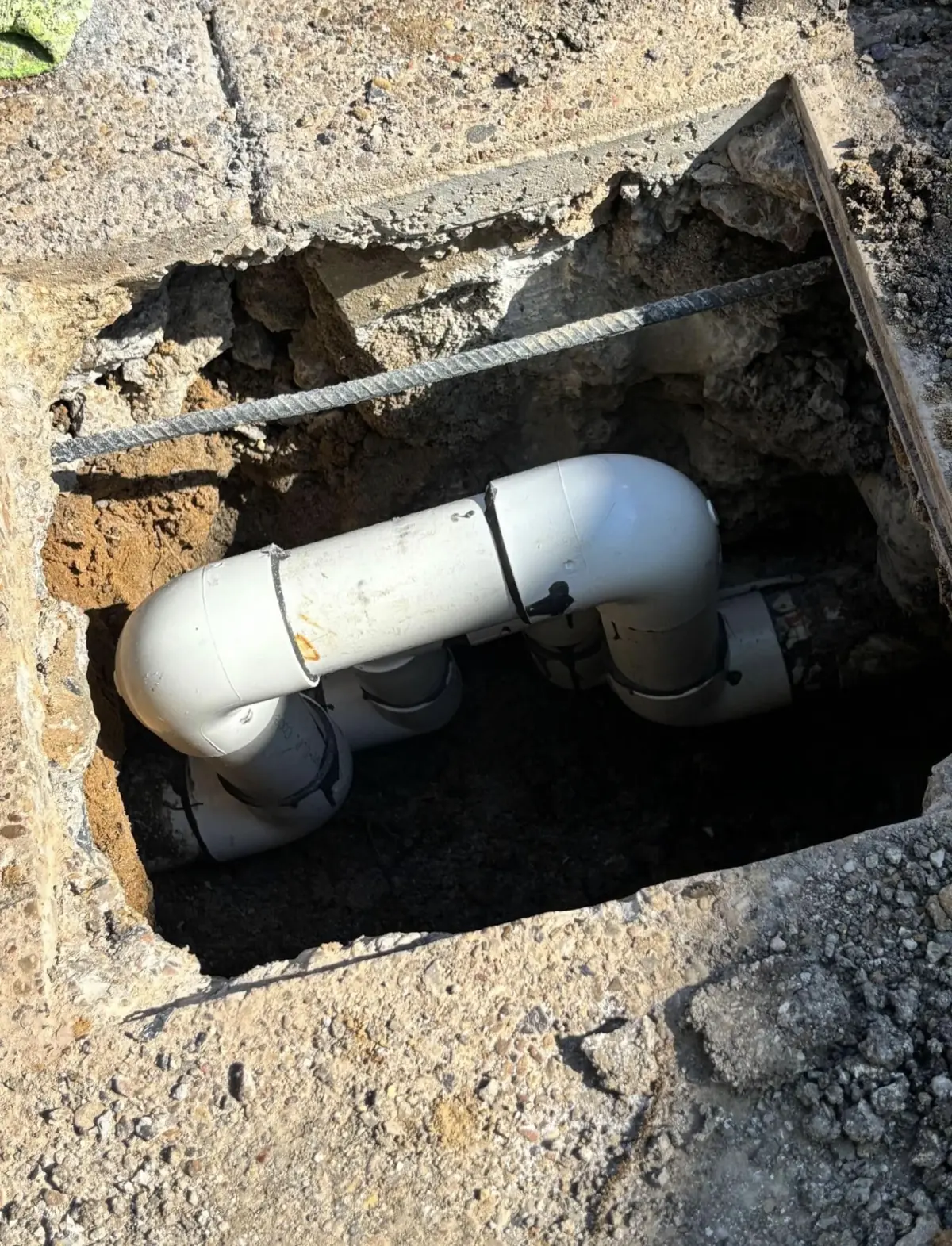
5. Underground plumbing
The pipes between the pool and the equipment run under the deck and the yard. Soil movement, roots and freezes crack them. See underground pipe leaks.
6. The shell
Cracks in the plaster, the tile line, or where the steps meet the wall. Some are only on the surface. Some go through. See cracks.
7. The equipment pad
Pumps, filters, heaters and valves. Often visible, and often the easiest fix. See equipment pad leaks.
Why these spots
Almost every leak happens where two different materials meet. A plastic skimmer meets a concrete shell. A metal or plastic light niche meets plaster. A fitting meets a buried pipe. Concrete, plaster, PVC and soil all move differently with heat, cold and wet and dry seasons. Over years, the seams between them open up. That is why a pool can hold water for ten years and then start leaking at the skimmer.
How to narrow it down at home
- Let the water drop with the pump off and the autofill off. If it stops at the skimmer opening or just above the light, look there first.
- Compare the drop with the pump on and off. Here is what each result means.
- Check the equipment pad for drips, wet gravel or a valve that weeps.
- Walk the yard between the pool and the equipment for wet spots or green strips.
Why we test everything anyway
About the most expensive mistake in pool leaks is fixing the first leak you find and calling it done. We regularly find two leaks in one pool: a skimmer and a return line, or a light and an underground drain line. Testing every line and the shell in one visit means you fix it once.
Do not forget the extras
Spas, spillways, waterfalls, bubblers and in-floor cleaning systems all have their own plumbing. Each is one more place to leak, and one more line we test. See our page on where pools leak.
Questions
What is the most common place for a pool to leak?
The skimmer is one of the most common, because it is a separate piece set into the concrete and the joint takes the stress when the ground moves.
Can a pool have more than one leak?
Yes. That is why we test every line instead of stopping at the first leak we find.
Do older pools leak more?
Often, yes. Seals, putty and plaster wear out, and years of soil movement work joints loose. But new pools leak too, usually at a fitting or where the plumbing was joined during the build.
Can a pool leak through the plaster?
Plaster is not waterproof on its own; the shell under it holds the water. A crack that goes through the plaster and into the shell can leak. Surface crazing in old plaster usually does not.