On this page
What can leak
- The drain fitting where it meets the shell.
- The line from the drain to the equipment, under the pool and the deck.
- A relief valve in the drain sump, found in some pools, that can stick open.
Signs
- The pool loses more water with the pump off. See pump on or off.
- The level never stops at one point. It just keeps going down.
- Air in the pump basket or bubbles at the returns.
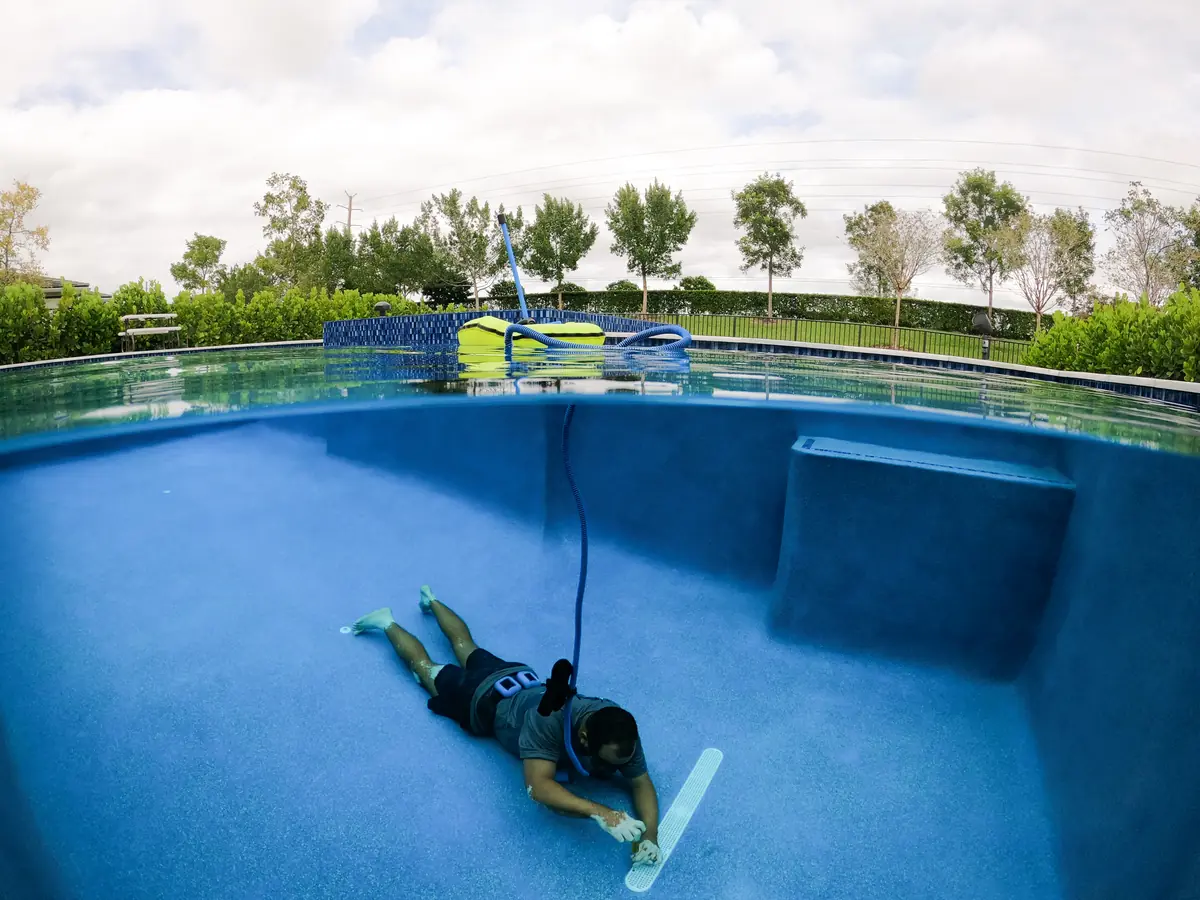
How we test it
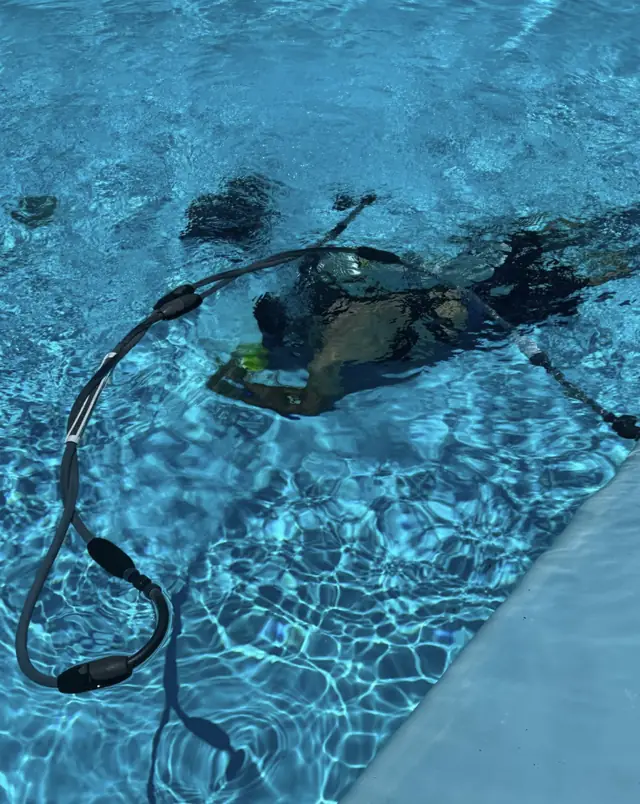
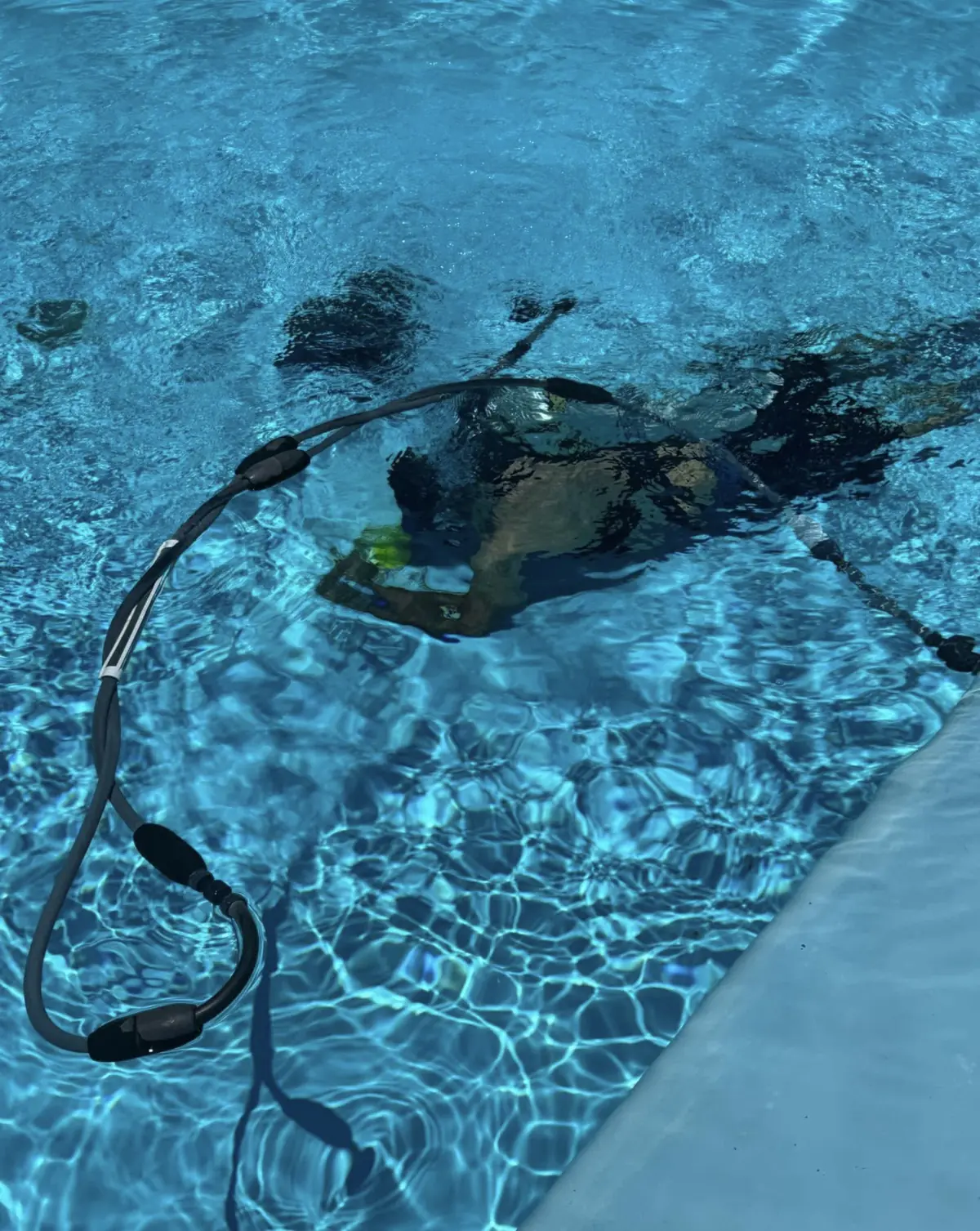
A tech dives down and releases dye around the drain cover and the fitting. We also plug the drain line and pressure test it from the pool side. A drop on the gauge means the line leaks somewhere between the drain and the equipment.
How it is fixed
A leaking fitting can often be sealed under water. A leaking line is found with listening equipment and repaired where it breaks. Either way, you get the price before any work starts.
The hydrostatic valve
Many in-ground pools in Texas have a hydrostatic relief valve in the main drain sump. It lets groundwater into the pool if the water table rises, so the pool does not get pushed up out of the ground when it is empty. When that valve wears out or its seal fails, it can let pool water out instead. It is one of the parts we check at the floor of the pool.
Why the drain is hard to test from the deck
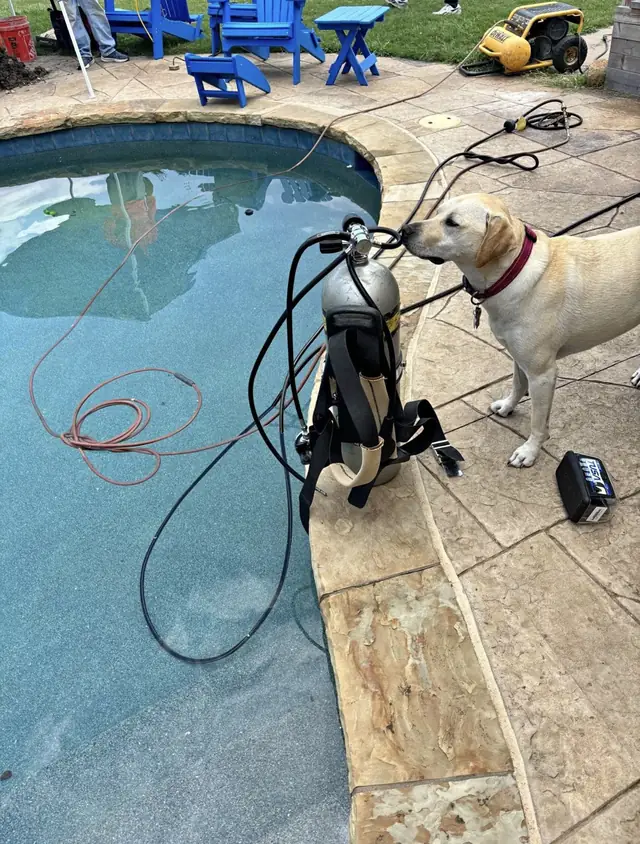
The main drain sits at the deepest point of the pool. Its line runs under the floor and back to the equipment. To test it, the line is isolated and pressure tested, and the drain itself is checked from inside the pool. That is why we dive: the tech can test the sump, the cover seat and the valve with the water in, without draining the pool.
Drain covers have an expiration date
Modern safety drain covers are rated for a set number of years, usually marked on the cover. Sun and pool chemistry make them brittle. A cracked, loose or missing cover is a safety risk to swimmers, not just a leak risk. If we see one, we tell you, and no one should swim until it is replaced.
When the drain line itself leaks
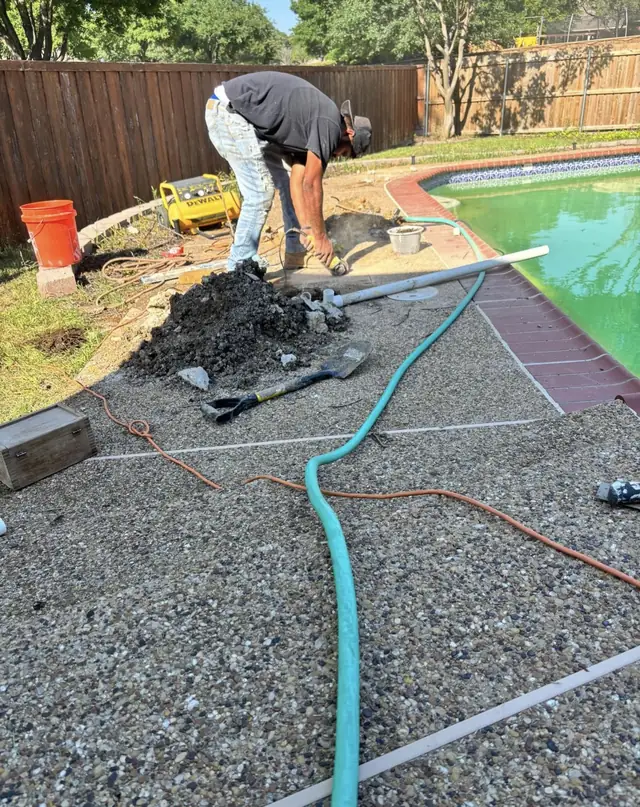
If the leak is in the pipe under the floor, it is found with pressure testing and listening equipment, then repaired from the outside when it can be reached, or isolated if that makes more sense for the pool. Every option, with its price, is in your report.
A safety note
Main drain covers protect swimmers from suction. Covers have a service life stamped on them. While we are down there, we look at the cover too and tell you if it is cracked, loose or past its date.
Questions
Can a main drain leak without the pump running?
Yes. With the pump off, water drains out through a crack by gravity. That is why a bigger loss with the pump off often points to the suction side.
Do you have to drain the pool to fix a main drain leak?
Usually not. Most main drain checks and many fixes are done under water. Draining has its own risks.
What is a hydrostatic valve in a pool?
A valve in the main drain sump that lets groundwater into the pool if the water table rises, protecting an empty pool from being lifted. A worn valve can leak pool water out.
Can a main drain be closed off instead of repaired?
Sometimes a leaking main drain line can be isolated, depending on the pool and its circulation. We tell you the options and the trade-offs in the report.