On this page
Loses more with the pump on
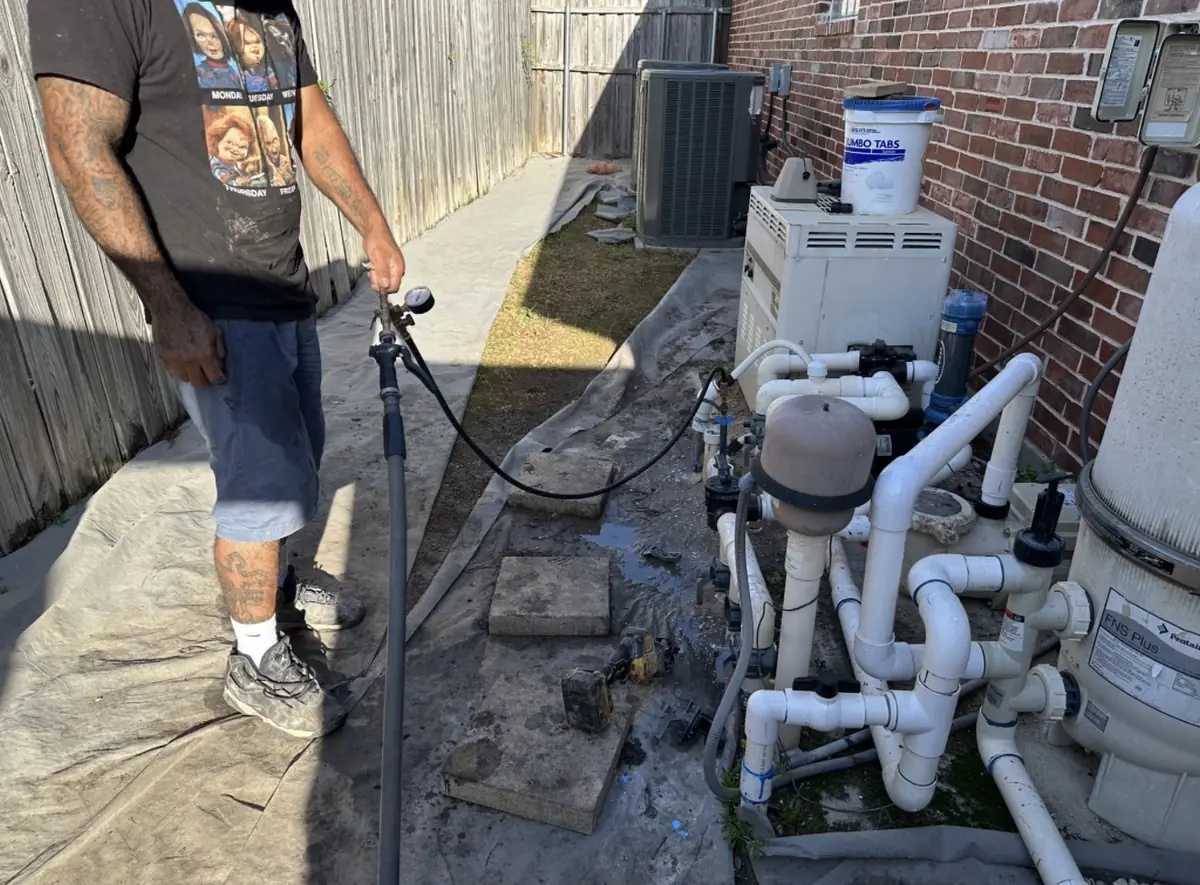
That points to the pressure side: everything after the pump. The return lines, the filter, the heater, the valves, and the pipes back to the pool. When the pump runs, these lines are under pressure and push water out of any crack.
Loses more with the pump off
That points to the suction side: the skimmer and main drain lines that feed the pump. With the pump running, these lines pull, so a crack can suck in air instead of losing water. You may see bubbles at the returns or air in the pump basket. With the pump off, gravity takes over and water runs out.
Same either way
If the loss does not change with the pump, the leak is likely in the pool itself: the shell, a fitting, the light, the skimmer throat or a crack in the plaster.
It stops at the same level
This is one of the best clues there is. If the water always stops dropping at the middle of the skimmer opening, the leak is likely at the skimmer. If it stops at the light, look at the light. Measure from the stop point to the tile and tell us when you book.
How to run the test
- Do a 24-hour bucket test with the pump on its normal schedule.
- Do a second 24 hours with the pump off.
- Compare the two drops, and enter them in our leak check.
The two sides of the plumbing, in plain words
Your pump pulls water out of the pool through the skimmers and main drain. That is the suction side. It pushes clean water back through the filter, heater and returns. That is the pressure side. While the pump runs, the suction lines are under a slight vacuum and the return lines are under pressure. That is why the same small crack can leak in one mode and pull in air in the other.
Clues at the pump
- Air bubbles in the pump basket, or the basket only half full of water: something on the suction side is letting air in.
- Bubbles blowing out of the returns at start-up that never clear.
- Water on the ground near the pump, under a union or around the lid.
- A pump that has to be primed again after it sits off.
Any one of these is worth mentioning when you book. It tells the technician which lines to test first.
When it stops at the light or the skimmer
If the water drops and then holds steady at the same level, look at what sits at that height. Stops at the bottom of the skimmer opening point to the skimmer. Stops a little above the light point to the light niche or its conduit. Stops nowhere near anything usually means the shell, a fitting lower down, or underground lines. Where pools leak most walks through each spot.
Do not guess with parts
We see a lot of pools where a new pump lid o-ring, a new valve and a skimmer patch went in before anyone tested the lines. Sometimes one of those was the leak. Often it was not. A pressure test tells you which line is leaking before you spend money on parts.
Why a pro still tests every line
These clues narrow it down. They do not pin it down, and a pool can have more than one leak. We pressure test every line, skimmer, returns, main drain, spa and equipment, so nothing is missed. See how a leak detection works.
Questions
Why does my pump lose prime?
A suction-side leak, a cracked pump lid, a dry lid O-ring or a low water level can all let air in. If the pump also loses water with it off, a suction line leak is likely.
Can I keep running the pump if the pool is leaking?
Yes, as long as the water stays above the skimmer opening. If it drops below, turn the pump off so it does not run dry, and top the pool up.
Why does my pool lose more water with the pump off?
With the pump off, the suction lines and main drain are not under vacuum, so water can run out through a crack or loose fitting on that side. A shell or light leak also keeps leaking with the pump off.
Can air in the pump cause water loss?
The air itself does not lose water, but the spot where air gets in while the pump runs is often where water gets out when it stops. It is one of the best clues for finding a suction-side leak.