On this page
Common equipment leaks
- Pump shaft seal. Water dripping from under the motor, between the motor and the pump housing.
- Pump lid O-ring. Air in the basket and a slow drip at the lid.
- Unions and fittings. Drips where pipes join the equipment.
- Filter. Leaks at the tank clamp, the drain plug or the valve on top.
- Heater. Leaks from inside the heater cabinet, or rust stains under it.
- Valves. Drips at the handles of the valves that steer the water.
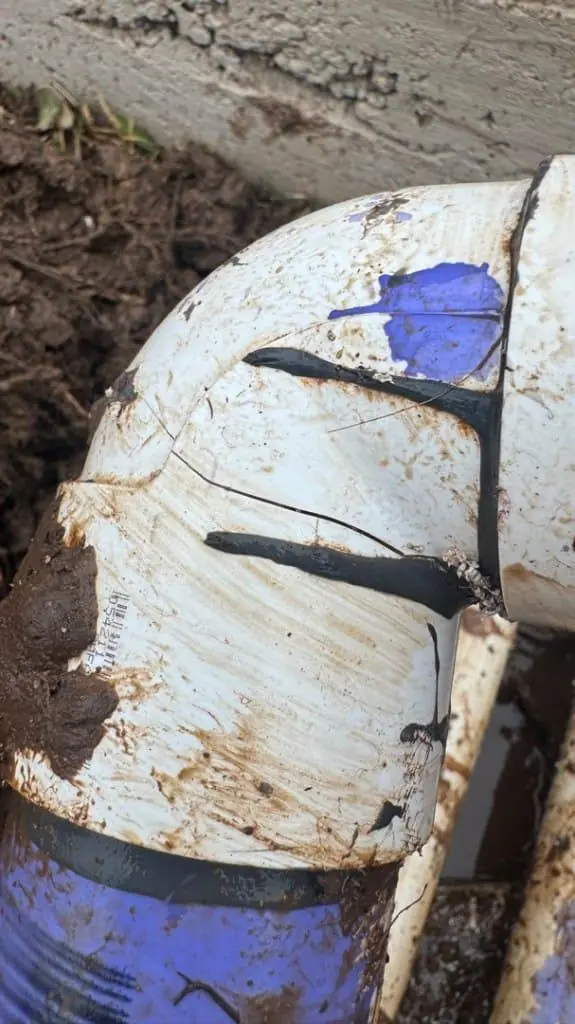
What to look for
- Puddles or wet concrete under the pad.
- White crust or green stains on fittings, left by dried pool water.
- Rust under the heater or the pump motor.
- Drips that only show while the pump runs, or only when it is off.
What is safe to check yourself
- Look the pad over with the pump running, and again with it off.
- Hand-tighten loose unions. Do not use tools on plastic fittings.
- Check the pump lid O-ring is in place and not cracked.
Leave the heater cabinet and anything electrical closed. If you see water near electrical parts, turn the equipment off at the breaker.
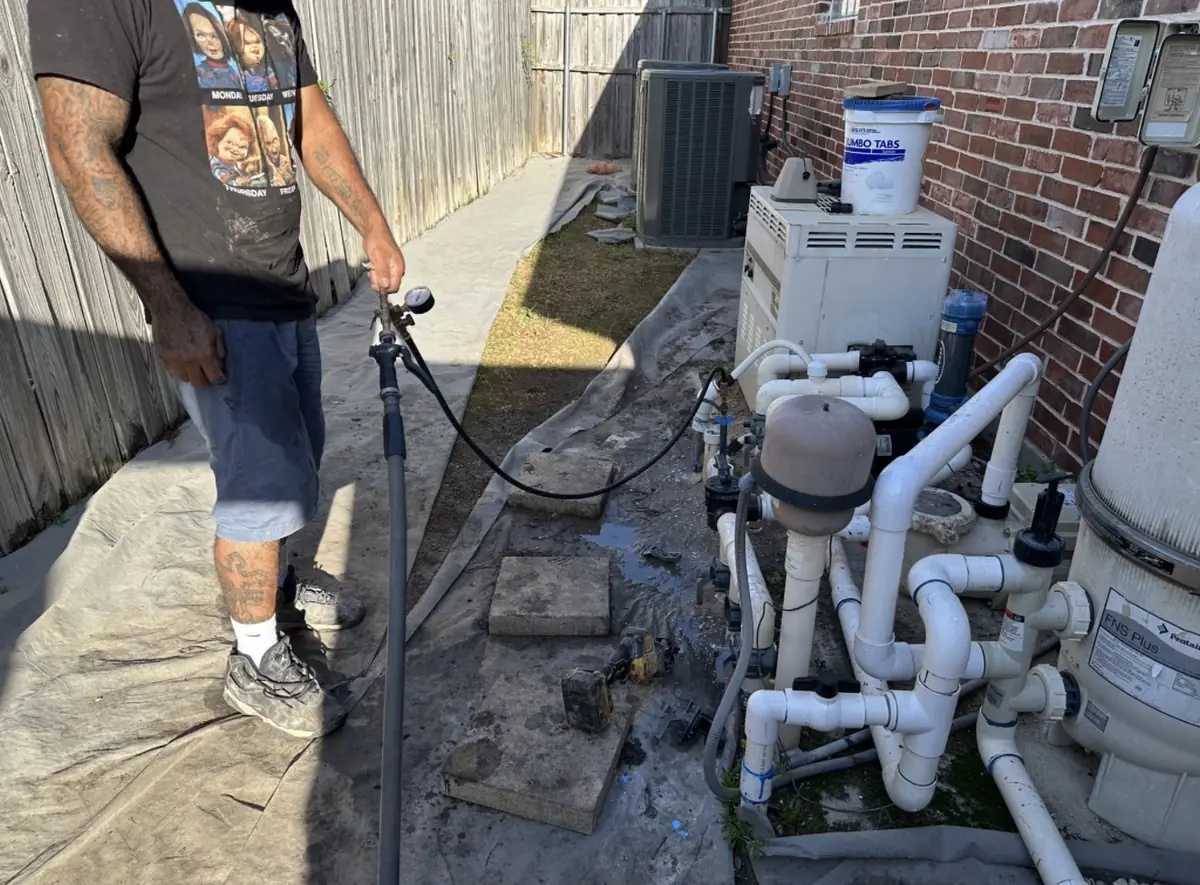
The leak you can see, and the one you cannot
Equipment leaks are often visible: a drip at the pump, wet gravel under a valve, a stain under the heater. The less visible one is the multiport or backwash valve. A worn seal inside can let water run out the waste line all day, and the waste line often empties somewhere you never look. If your waste line runs to the street, a drain or the yard, check it while the pump is running.
Pump seals
Water dripping from under the pump motor, between the motor and the wet end, often means the shaft seal has worn out. Left alone, the water can run into the motor bearings and ruin the motor. It is a common repair, and catching it early saves the motor.
Heaters and heat pumps
Water dripping from a heater is not always a leak: a heat pump makes condensation when it runs, which looks like a drip. Water from a gas heater's heat exchanger, or water when the heater is off, is a leak. We tell you which one you have.
Freeze damage at the pad
The equipment pad is the most exposed part of the system. A hard freeze can crack a pump housing, a filter, a valve or the pipes above ground. After a freeze, look for cracks and drips before you start everything up. More on freezes.
Not the only leak?
A drip at the pad is real, but it may not explain all the loss. That is why our leak detection tests every line, not just the one that looks guilty.
Questions
Why is my pool pump leaking water?
A worn shaft seal, a cracked lid or O-ring, or a loose union are the usual causes. A seal leak drips from under the motor and is a repair, not a tightening job.
Can a leak at the equipment pad drain the pool?
It can, especially on the pressure side while the pump runs. If the level drops faster with the pump on, check the pad first.
Is it normal for a heat pump to drip water?
Yes, while it runs. A heat pump makes condensation, which can be a lot of water on humid days. If it drips when it is off, or the water smells like chlorine, it may be a leak.
How do I check if my backwash valve is leaking?
With the pump running in filter mode, look at the end of the waste or backwash line. If water flows out when you are not backwashing, the valve is letting water by.