On this page
- 1. We listen first
- 2. A look at the pool and the equipment
- 3. Every line gets pressure tested
- 4. Listening equipment finds the spot
- 5. Dye shows the small ones
- 6. We get in the water
- 7. You get the report
- What equipment we use
- How long it takes
- What we need from you
- Quick stops while we are there
- Who does the work
1. We listen first
You tell us what you have seen: how fast the water drops, what your bucket test showed, whether it stops at a certain level. That tells us where to start.
2. A look at the pool and the equipment
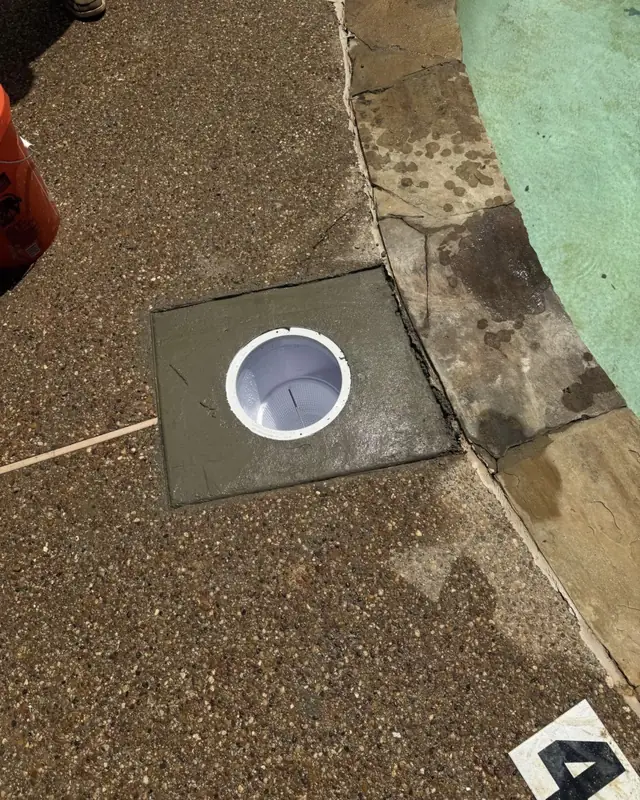
We check the equipment pad, the skimmer, the returns, the light, the tile line and the deck. Some leaks are visible right away. Many are not.
3. Every line gets pressure tested
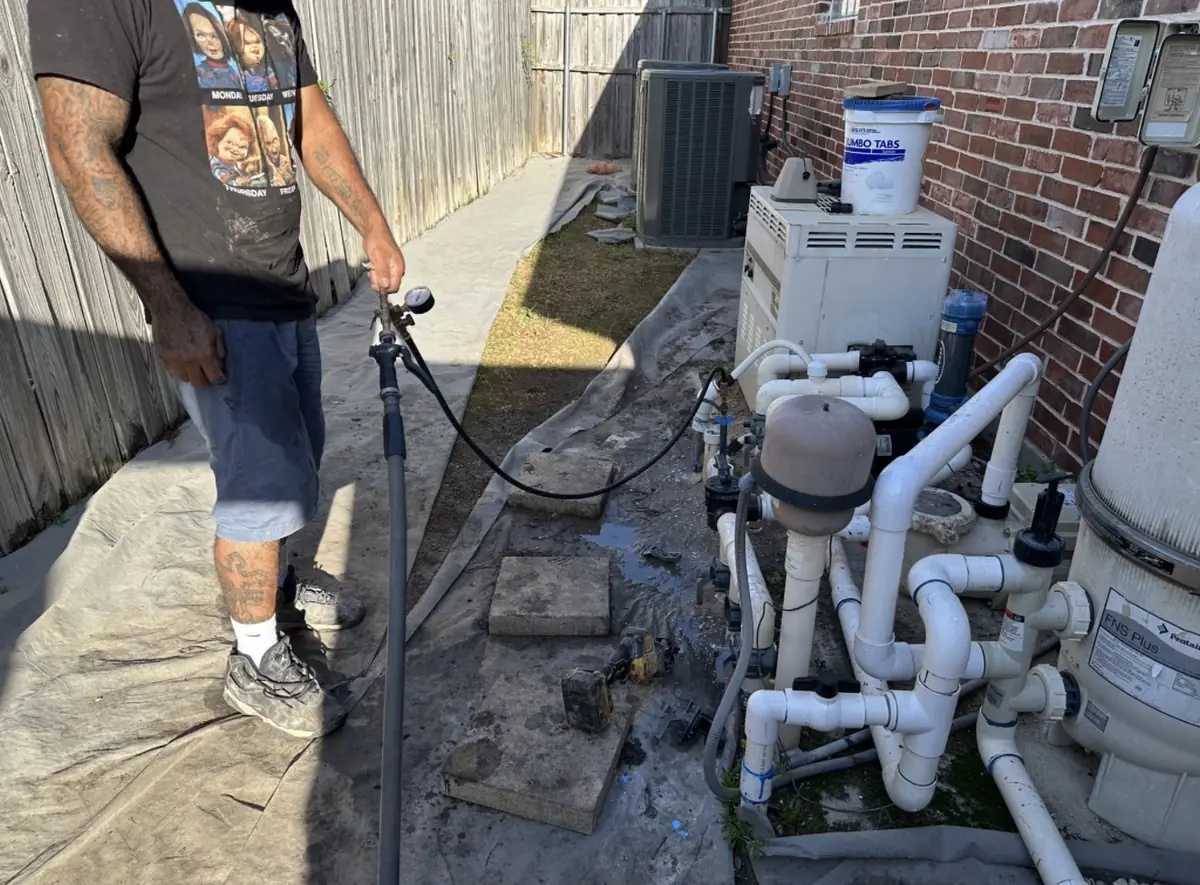
We plug each line at the pool and put it under pressure. A line that holds is good. A line where the gauge drops is leaking. We test the skimmer, return, main drain, spa and equipment lines one by one, not just the one that looks guilty.
4. Listening equipment finds the spot
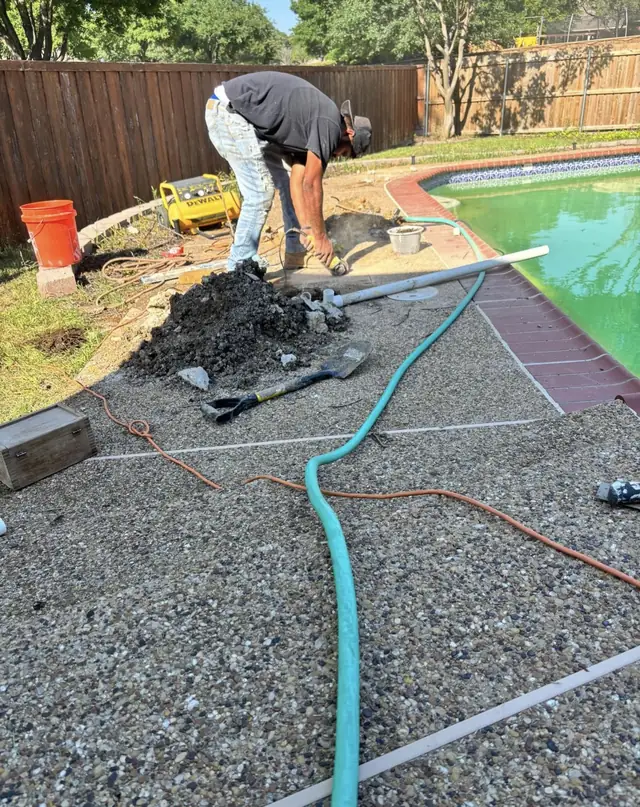
Once we know which line leaks, we find where. Water escaping a pressurized pipe makes a sound. Our listening equipment picks it up through the deck and the ground, so we dig in one spot, not across the yard.
5. Dye shows the small ones
At cracks, fittings and the skimmer throat, we release a little dye in still water. If the spot is leaking, the dye is pulled right into it.
6. We get in the water
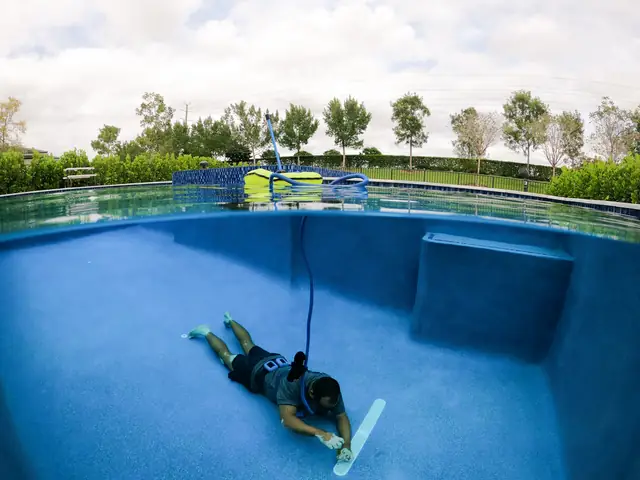
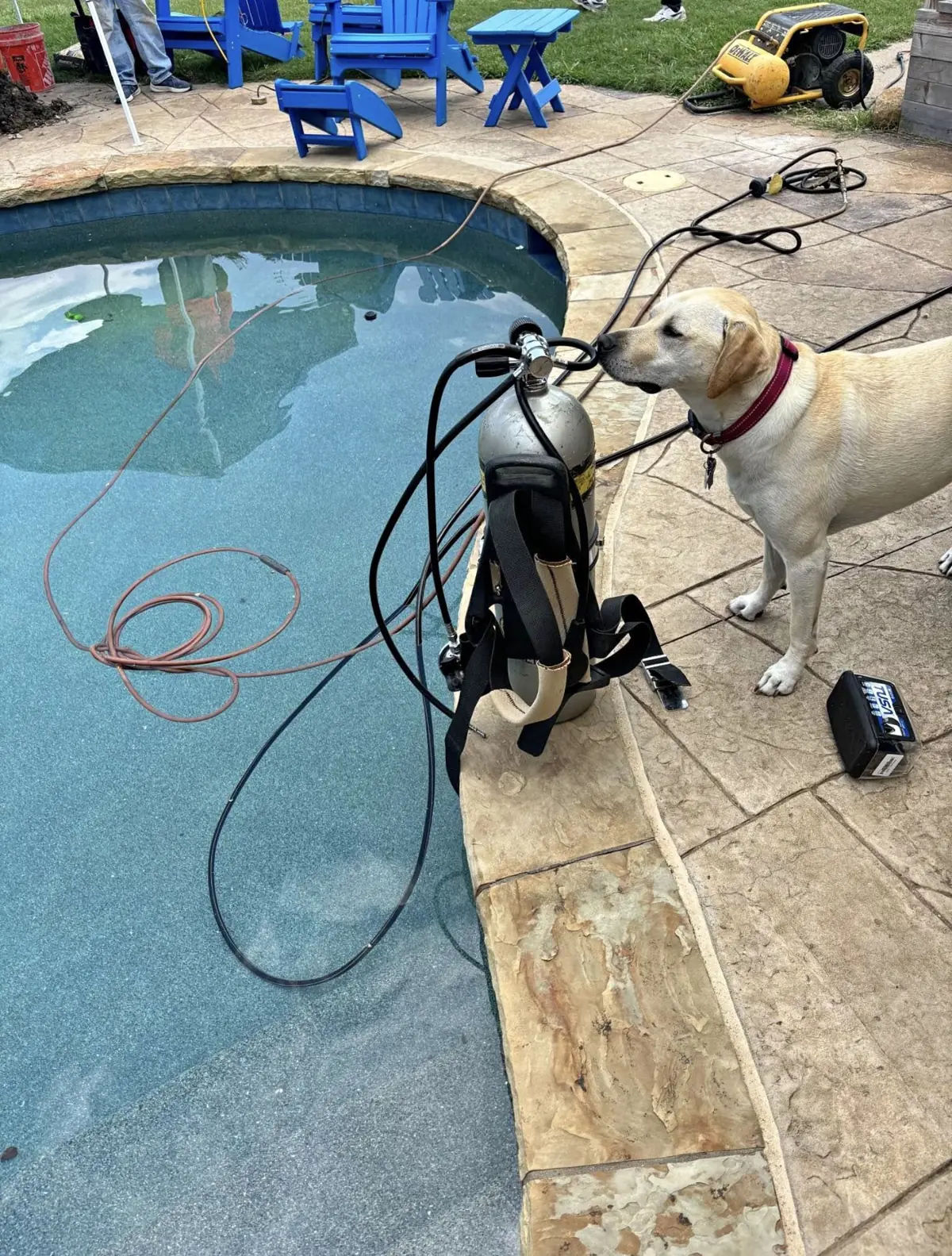
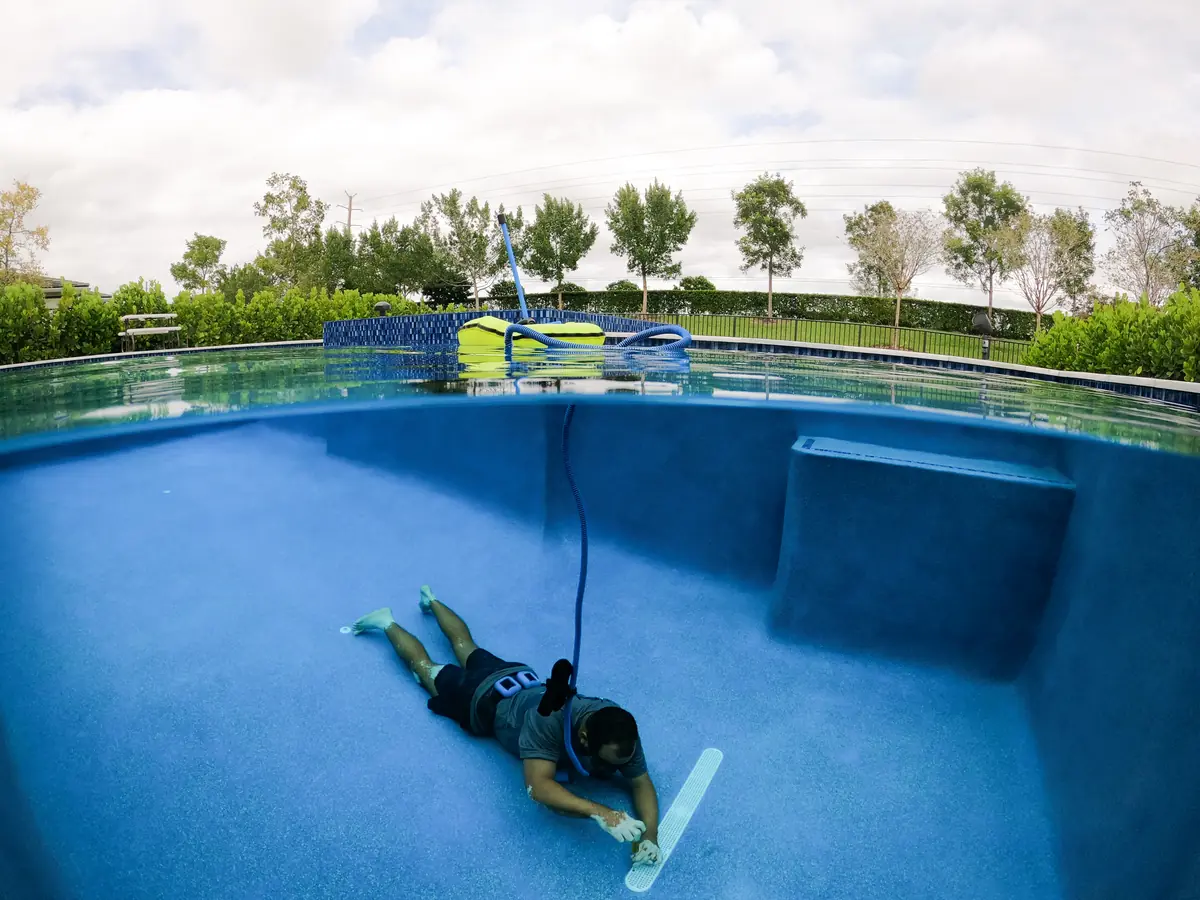
For the shell, the main drain, the light and the fittings, a tech goes under with dive gear and checks them up close. The water has to be clear for this.
7. You get the report
Everything we tested and found, with photos and video where available, whether you were home or not. If a repair is needed, you get the price before any work starts. Easy leaks that are quick to stop are stopped on the spot at no extra cost.
What equipment we use
Our technicians are certified on Anderson and LeakTronics leak detection equipment. A typical visit uses test plugs and gauges to pressure test each line, electronic listening equipment that picks up the sound of water escaping underground or in the shell, dye to show small leaks at fittings and cracks, and dive gear so the tech can work at the floor and walls of the pool with the water in. The tools that come out depend on what the pressure tests and the first look show.
How long it takes
Most residential visits take a few hours. Pools with a spa, water features, in-floor cleaning or long runs of buried pipe take longer, because each one has more lines to test. Commercial pools with several skimmers, returns and drains are planned ahead so testing fits around the property.
What we need from you
- Clear water. If the water is green or cloudy, the dive part of the test cannot be done, though the line testing still can.
- The pool at its normal level, with the autofill off for a day or two before, if you can.
- Access to the backyard, the equipment pad and the breaker for the pool equipment.
- Pets inside, and anything you have noticed: where the water stops, when it drops faster, bills, photos.
Quick stops while we are there
When a leak is easy to reach and a quick fix makes sense, we stop it during the visit at no extra cost, for example sealing a skimmer throat or a light conduit with the right putty, or closing a valve that stops a leaking line. Bigger repairs like a buried pipe or a skimmer replacement are quoted in the report, with the price before any work.
Who does the work
Our technicians are certified on Anderson and LeakTronics leak detection equipment, and background checked. See why DFW books us, and what a leak detection costs.
Questions
Do I need to be home for a leak detection?
No. Make sure we can get through the gate and to the equipment. Everyone gets the report, with pictures and video where available.
What should I do before the visit?
Keep the pool at its normal level, the water clear, and the pump running a few hours ahead. We cannot dive in cloudy or green water.
How long does a pool leak detection take?
Most homes take a few hours. A pool and spa, water features, in-floor cleaning or long buried lines add time because there is more to test.
Will you find every leak?
We test every line, the shell, the fittings and the equipment, and we report everything we find. Some pools have more than one leak, which is why we test everything instead of stopping at the first one.