On this page
Why underground lines break
- Soil movement. North Texas clay swells when wet and shrinks in drought. See why Texas pools leak.
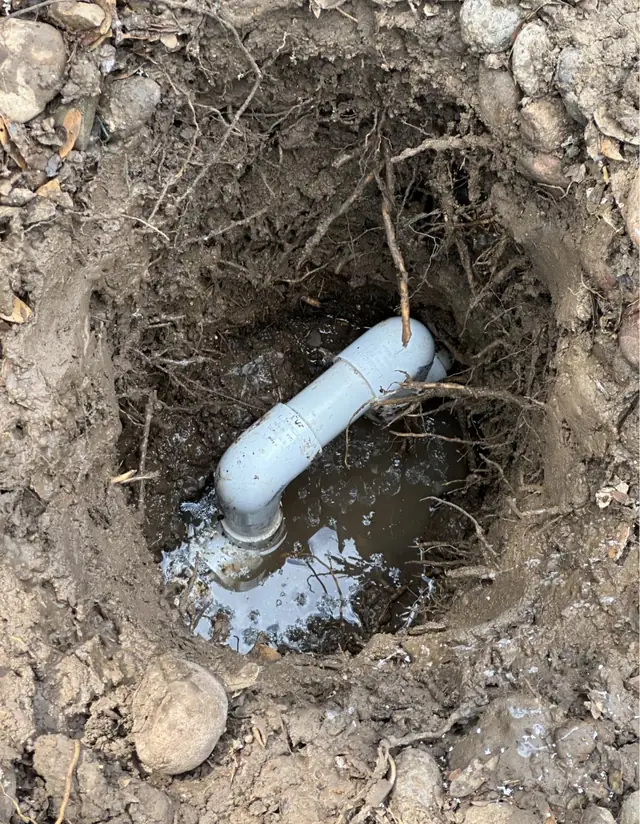
- Tree roots that wrap around and crack pipes.
- Freezes that split shallow lines near the equipment.
- Age and old glue joints that finally let go.
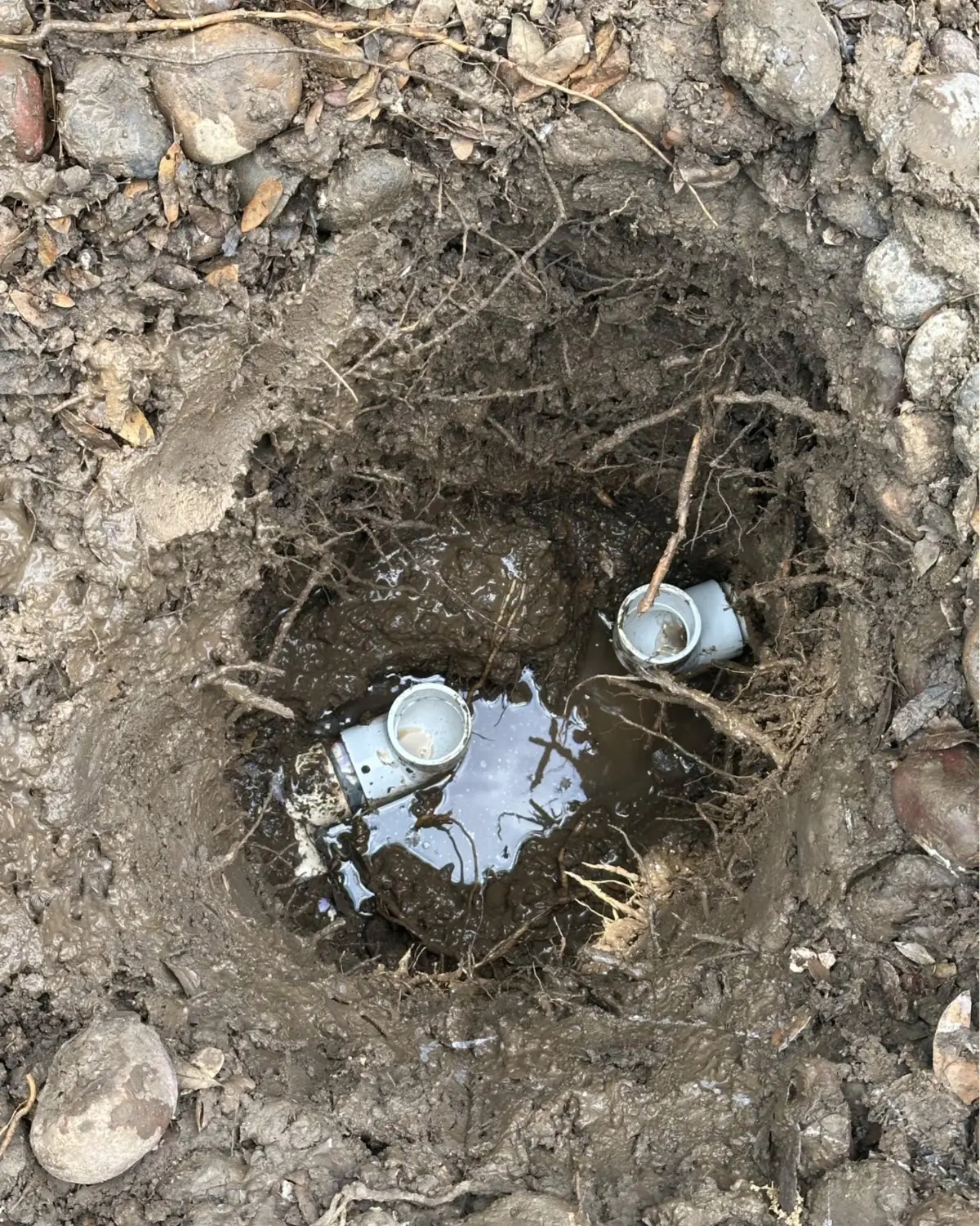
How we find the exact spot
- Pressure test each line. That tells us which pipe leaks.
- Trace the line so we know its path under the deck.
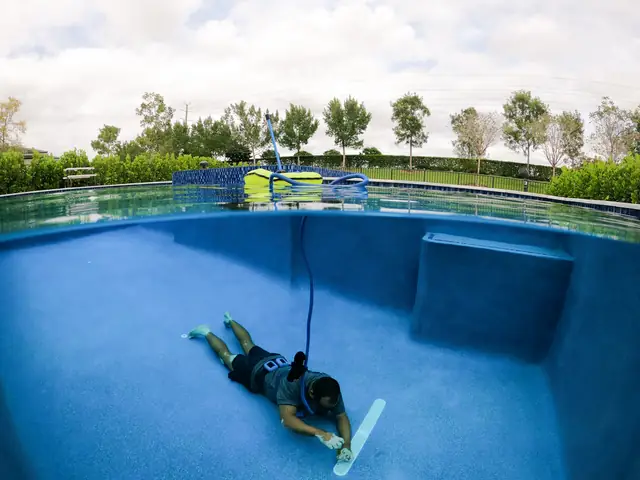
- Listen. Water escaping a pressurized pipe makes a sound our equipment picks up through concrete and soil.
Then we mark one spot to open, not the whole run.
How it is repaired
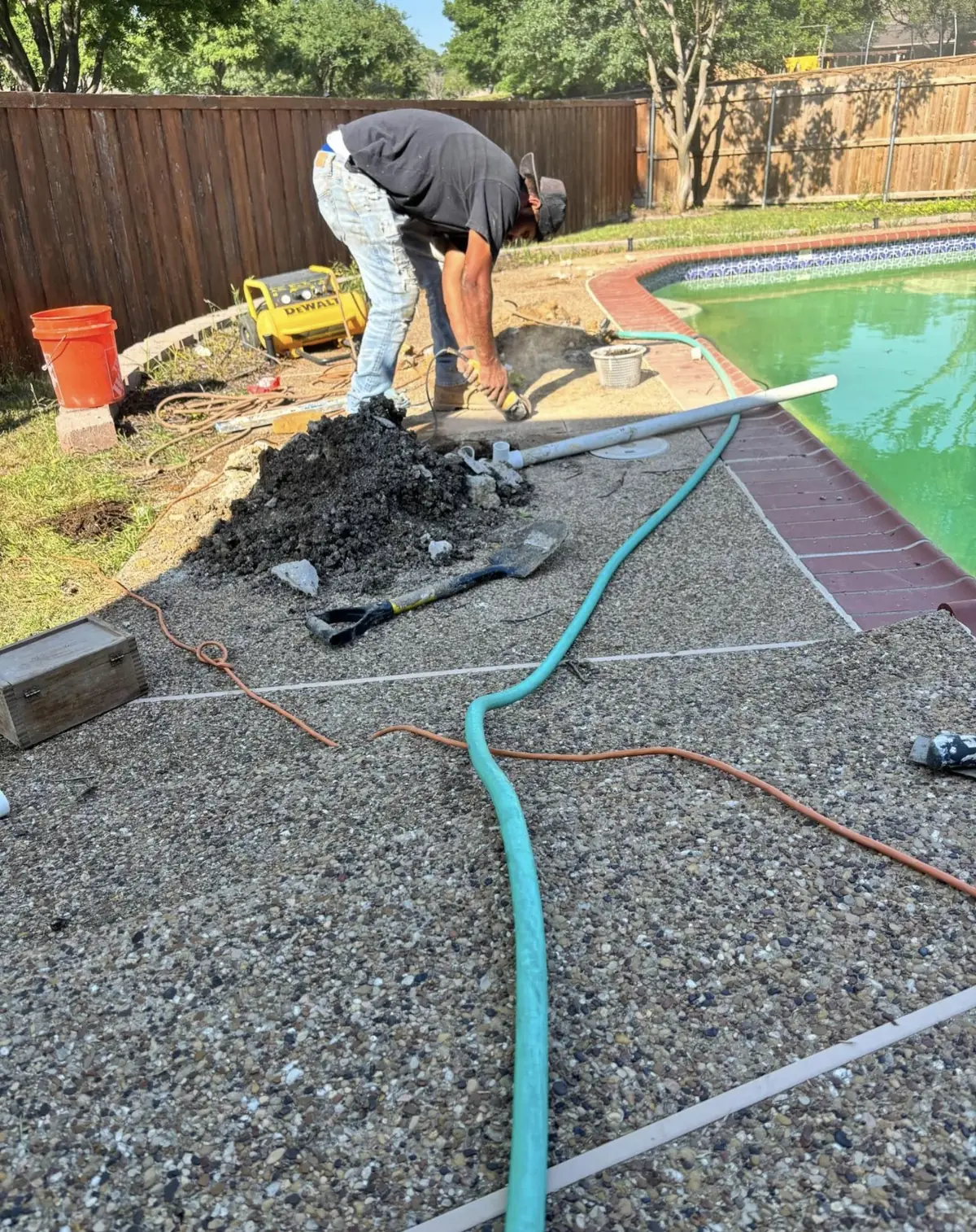
We open the deck or the ground in that one spot, replace the cracked section with new pipe and fittings, and pressure test the line again before anything is closed up. Then the deck is patched.
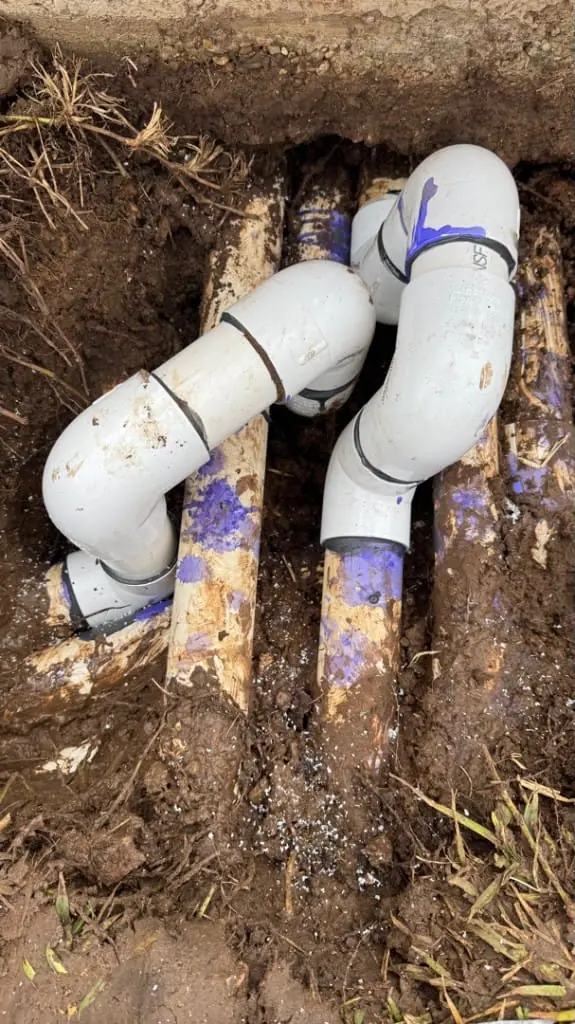
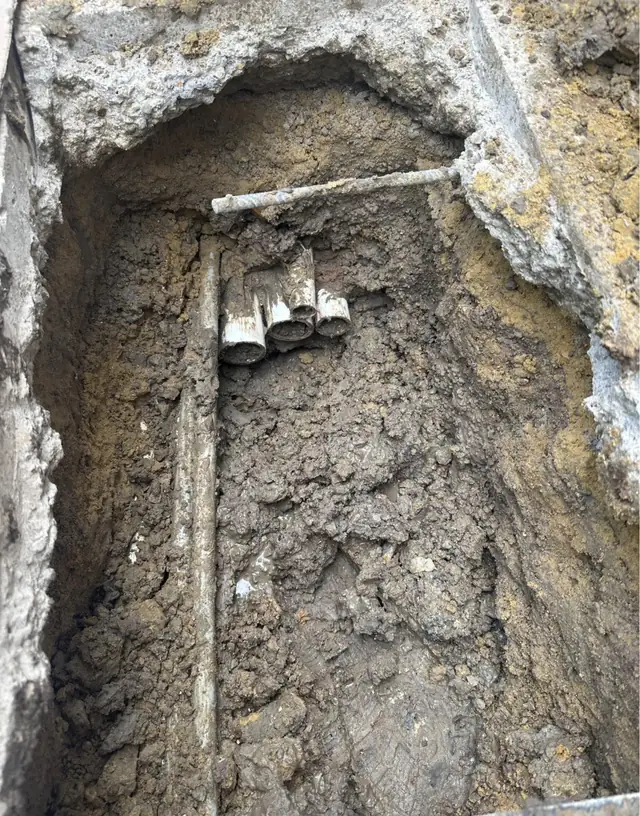
When several lines run side by side and more than one is failing, replacing the run can be the better fix. We show you the options and the price for each before work starts.
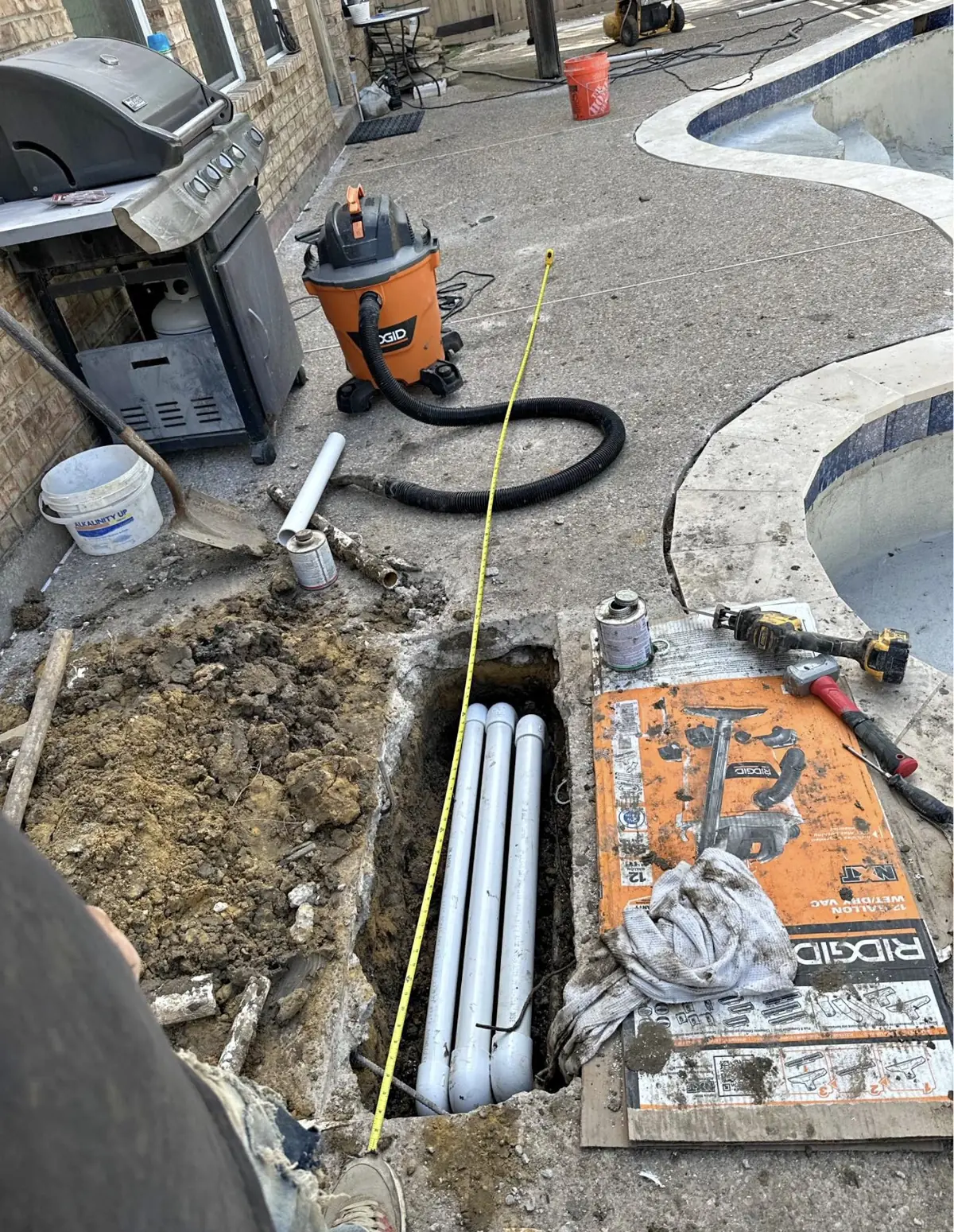
What a buried line leak looks like
You rarely see it. Most often the pool loses more water with the pump running, which points to the return lines, or more with the pump off, which points to the suction side. Sometimes there is a wet spot, a green strip of grass or a sinking paver between the pool and the equipment. Sometimes there is nothing at all on the surface, because the water soaks straight down into the clay.
Why we pressure test before we dig
Digging is the expensive part, so we make sure we dig in the right place. Each line is plugged and pressure tested on its own. Once a line fails, listening equipment follows it underground to the spot where water is escaping, so the dig is one small hole instead of a trench across the yard.
After the repair
The new section is glued in, and the line is pressure tested again before the hole is closed. Then the dirt goes back, compacted, and the deck or yard is patched. On jobs where several old lines have failed, rerouting a new line can make more sense than patching the old one again. You see both options and prices in the report.
Roots, clay and freezes
Most buried line failures in Dallas–Fort Worth come from the same few causes: tree roots that wrap around fittings, expansive clay that shifts with the seasons, and hard freezes. Why Texas is hard on pool plumbing.
The cost of waiting
An underground leak can wash out soil under the deck and keep raising your water bill. See what a leak costs each month. Repairs carry a 1 to 10 year warranty*, and financing is available.
*Warranty terms vary. Every project is different, so every warranty is custom.
Questions
How do you find a leak in an underground pool pipe?
We pressure test each line to find the one that leaks, trace its path, then use listening equipment to hear the water escaping through the deck or soil.
Will you have to tear up my whole deck?
Rarely. We locate the leak first and open one spot. Bigger openings only happen when several lines need replacing, and you see the price first.
How much does it cost to fix an underground pool pipe?
It depends on how deep the line is, what is on top of it, and how much pipe needs replacing. We give you the price in the report, before any work, and financing is available, subject to approval.
Can a leaking pool line be fixed without digging?
Some leaks at fittings can be sealed from inside the pool, but a cracked buried pipe has to be reached to be repaired properly. Finding the exact spot first keeps the dig small.