On this page
What you need
- A 5-gallon bucket
- A marker or a strip of tape
- A few bricks or rocks, if the bucket floats
- 24 hours with no rain, no swimming and the autofill off
Step by step
- Bring the pool up to its normal level and turn off the autofill.
- Fill the bucket with pool water to about an inch from the top.
- Set the bucket on the first or second step, so the water inside sits close to the level of the pool water outside. Weigh it down if it moves.
- Mark the water level inside the bucket.
- Mark the pool level on the outside of the bucket.
- Run the pump on its normal schedule for 24 hours.
- Measure how far each mark dropped.
How to read it
If the pool and the bucket dropped about the same, you are most likely seeing evaporation. If the pool dropped more, the extra is a leak. A pool that dropped half an inch while the bucket dropped a quarter inch is losing a quarter inch a day to something other than the weather.
Put both numbers into our leak check and it does the math for you, then shows what that loss means in gallons.
Run it twice: pump on, then pump off
Do one 24-hour test with the pump running and a second with it off. The difference tells you which side of the plumbing to suspect. Here is what each result means.
Mistakes that spoil the test
- Leaving the autofill on. It refills the pool and hides the loss.
- Testing on a day it rains, or while people swim and splash water out.
- Running water features that splash over the edge. Turn them off for the test.
- Putting the bucket in the shade while the pool sits in full sun.
What a bucket test cannot tell you
The bucket test answers one question: is the pool losing more than the weather takes? It does not tell you where the water goes. Two leaks can look like one, a slow leak can hide inside a hot, windy day, and a leak that only runs when the spa or a water feature is on will not show up unless you run them during the test. Treat the result as the first clue, not the answer.
Bucket test or the dye test?
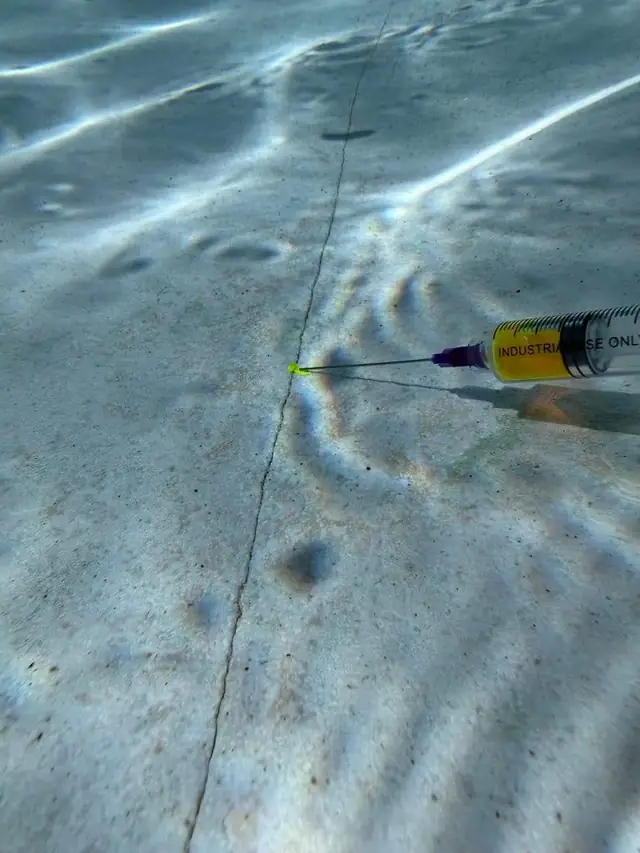
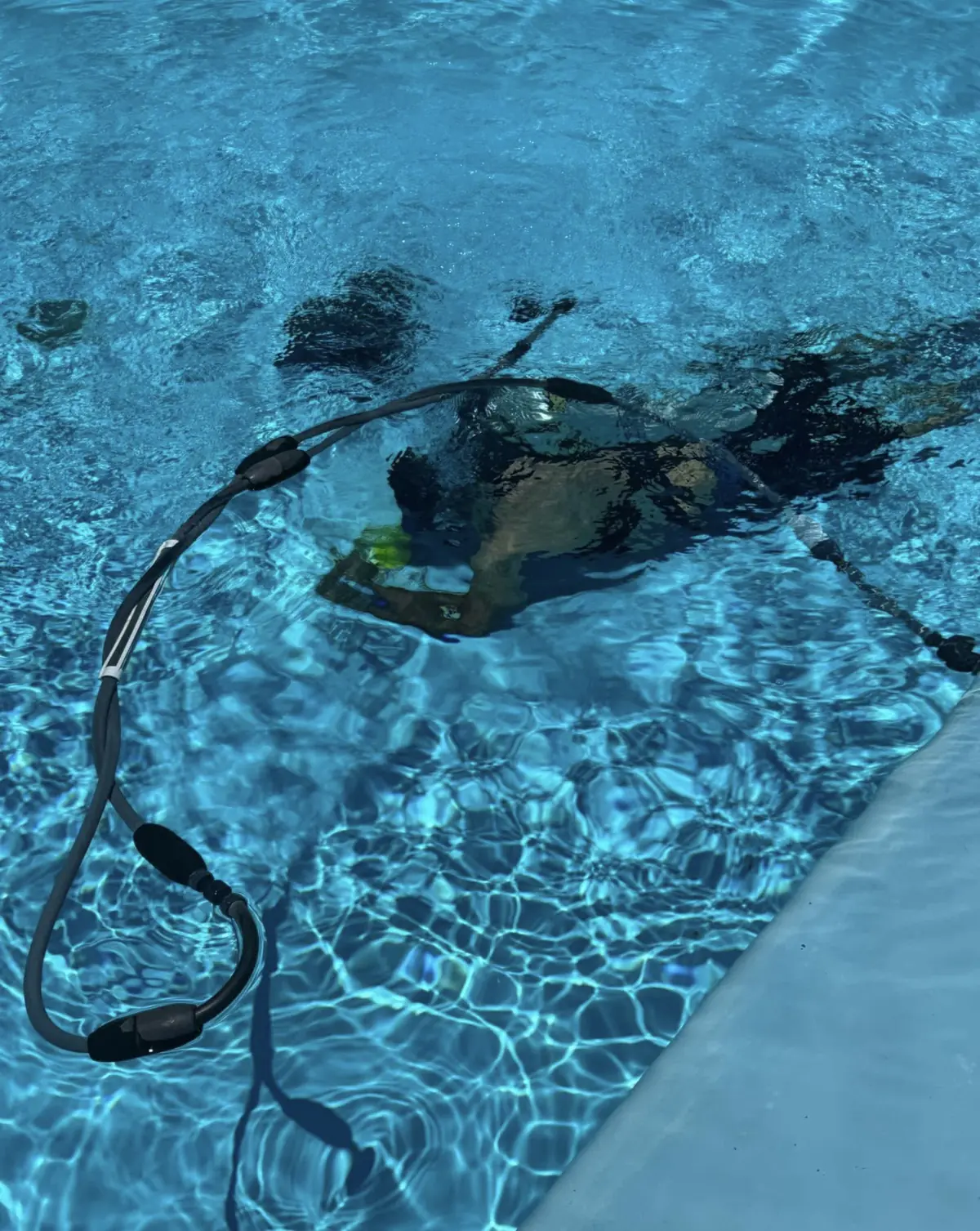
Homeowners sometimes try dye next. Dye is useful when you already know roughly where to look: a crack you can see, the skimmer throat, a light niche. Squeeze a little near the spot with the pump off and the water still, and watch whether it gets pulled in. Without a suspect spot, dye in open water just drifts. Our technicians dye test after the pressure tests have narrowed it down, often from inside the pool with dive gear.
Pool and spa together
If your spa spills into the pool, the two share water, and a leak in either one lowers both. Run the bucket test in the pool with the spa in its normal mode. If you can, run one more day with the spa isolated so it does not spill over, and watch whether the spa level drops on its own. More on spa leaks.
Winter and rainy weeks
In winter, evaporation is low, so even a small leak shows up clearly. The catch is rain: one storm resets the test. Pick a dry 24 hours, and if a front is coming through, wait. If the pool drops while the weather is cold and still, that is a strong sign of a leak.
When to call
If the test shows a leak, or you are not sure, book a leak detection. Pool or spa is $550, pool and spa together is $650, and every line gets tested.
Questions
How long should a pool bucket test run?
At least 24 hours. Two days, one with the pump on and one with it off, gives a clearer answer and points to the side of the plumbing that leaks.
What if the bucket loses more than the pool?
Then it is very likely evaporation and the bucket is sitting warmer than the pool. Move it to a step that is fully in the water and try again.
Do I run the pump during a bucket test?
Run one 24-hour test with the pump on its normal schedule, then a second with it off. Comparing the two points to the pressure side, the suction side, or the shell.
Can I do a bucket test with a cover on?
No. A cover cuts evaporation from the pool but not from the bucket, so the result is off. Take the cover off for the test, or skip the bucket and just measure the drop with the cover on and the autofill off.