On this page
Where spas leak
- Jet fittings in the spa walls.
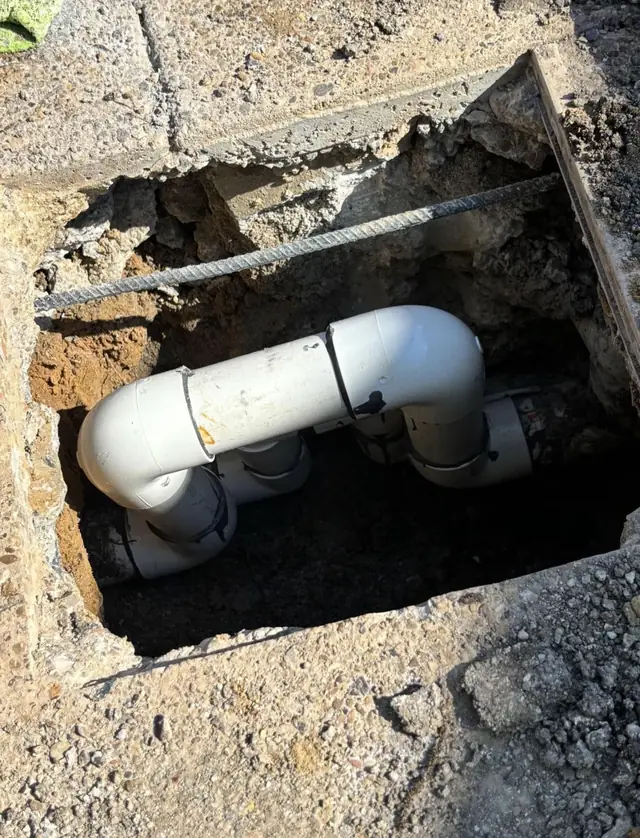
- Spa lines under the deck, including the blower line on spas that have one.
- The spillway, where the spa overflows into the pool. Cracks at the spillway lip let water out of the shell.
- The diverter valves at the equipment that switch between pool and spa.
Signs
- The pool drops faster when the spa is running.
- Wet soil or a crack around the outside of a raised spa.
- Dripping at the valves that send water to the spa.
How we test a spa
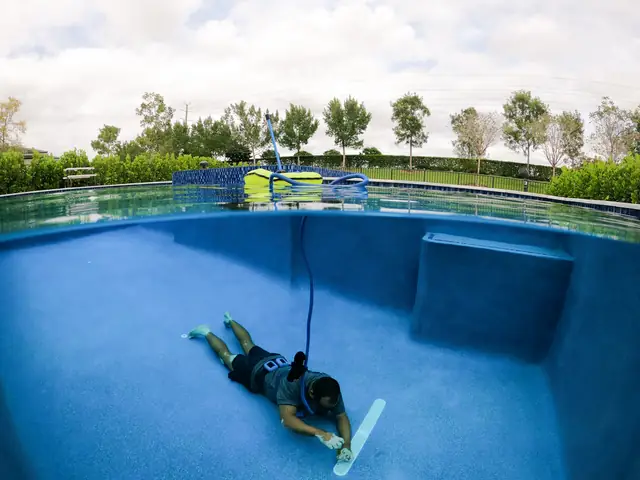
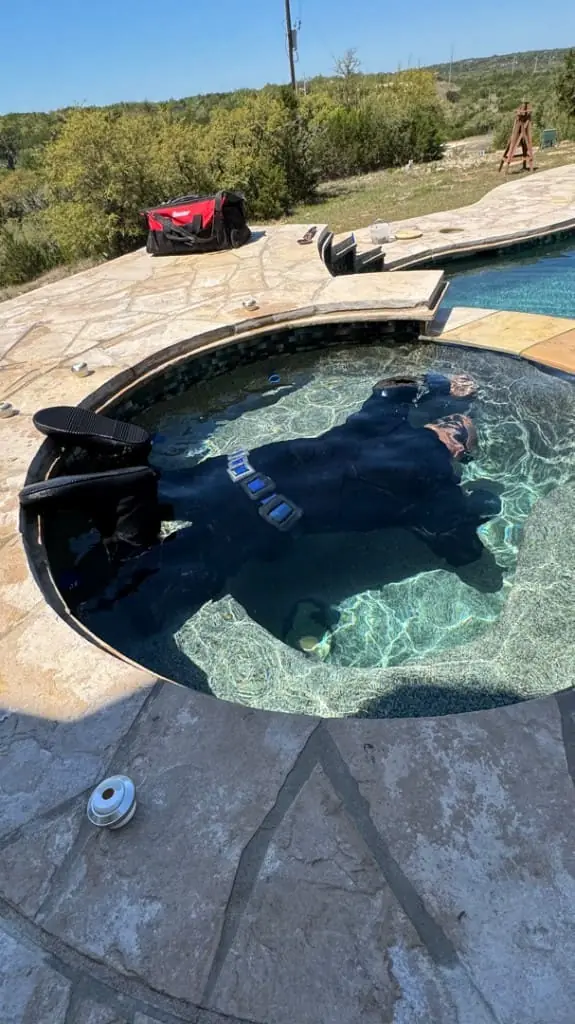
We test the spa as its own set of lines: jets, drains, the blower line and the spillway. A tech checks the spa shell under the water, and we dye test the spillway and fittings.
What it costs
A spa on its own is $550. A pool and spa together is $650 in one visit, $550 less than booking them separately. See the price builder.
The spillway and the spa dam
In most pool and spa combos, the spa sits a little higher and spills into the pool over a spillway or a dam wall. When the spa runs, the pump pushes water into it and it pours back into the pool. If the spillway is cracked, its tile has come loose, or water splashes over the edge onto the deck, the pool loses water that never shows up as a leak in the plumbing.
Raised spas
A raised spa has more wall above ground, often finished in stone or tile on the outside. Water can get behind that finish through cracked grout or a gap in the coping, then run down the outside of the spa. Look for white stains, efflorescence or wet spots on the stone face of the spa.
Spa lines and valves
The spa has its own suction and return lines, its own jets, and often an air blower line. The valves at the equipment switch the water between pool mode and spa mode. A valve that does not seal can let the spa drain into the pool when the pump is off, which looks like a spa leak but loses no water at all. Our tech checks each mode and each line on its own.
Heated water evaporates faster
A hot spa loses more water to the air than the pool does, especially on cool, dry nights. A spa that drops a little after a long soak is normal. A spa that drops overnight with the cover on is not.
A quick check you can do
Run a bucket test for a day with the spa off, then a day with the spa running. If the loss jumps with the spa on, mention it when you book.
Questions
Why is my pool losing water when the spa is on?
The spa jets, lines, blower or spillway may be leaking, or a diverter valve may be sending water where it should not. Testing the spa lines on their own shows which.
Is a pool and spa leak detection done in one visit?
Yes. Pool and spa together is one visit, priced at $650.
Why does my spa drain into my pool when the pump is off?
Usually a valve at the equipment is not sealing between spa mode and pool mode, or the spa sits higher and its lines let the water find its level. It is a valve issue, not a leak, and it is a quick check.
Do spa jets leak?
They can, where the jet body meets the shell or at its gasket. We test the spa lines under pressure and check the jets from the inside.