On this page
- 1. The water drops faster than it should
- 2. You add water every week, or the autofill never stops
- 3. The water bill went up
- 4. Soggy grass or wet spots that never dry
- 5. New cracks in the plaster, tile or deck
- 6. The deck is sinking, lifting or pulling away
- 7. The chemistry never holds
- 8. Air in the system
- 9. Water at the equipment pad
- Signs that look like a leak but are not
- How fast a small leak adds up
- Write it down
- What to do first
1. The water drops faster than it should
On a hot, windy Texas summer day a pool can lose about a quarter inch to evaporation, sometimes a bit more. If yours drops half an inch or more a day, or keeps dropping in cool weather, that is worth checking. Mark the water line on the tile with tape and look again in 24 hours.
2. You add water every week, or the autofill never stops
An autofill hides leaks. It quietly tops the pool up, so the level looks fine while water runs out somewhere else. If you hear the fill valve often, or you are dragging a hose out every few days, the pool is telling you something.
3. The water bill went up
Compare this month's bill with the same month last year. A jump with no new sprinklers, guests or pets in the house often points to the pool. Our leak cost chart shows what a leak of your size adds up to.
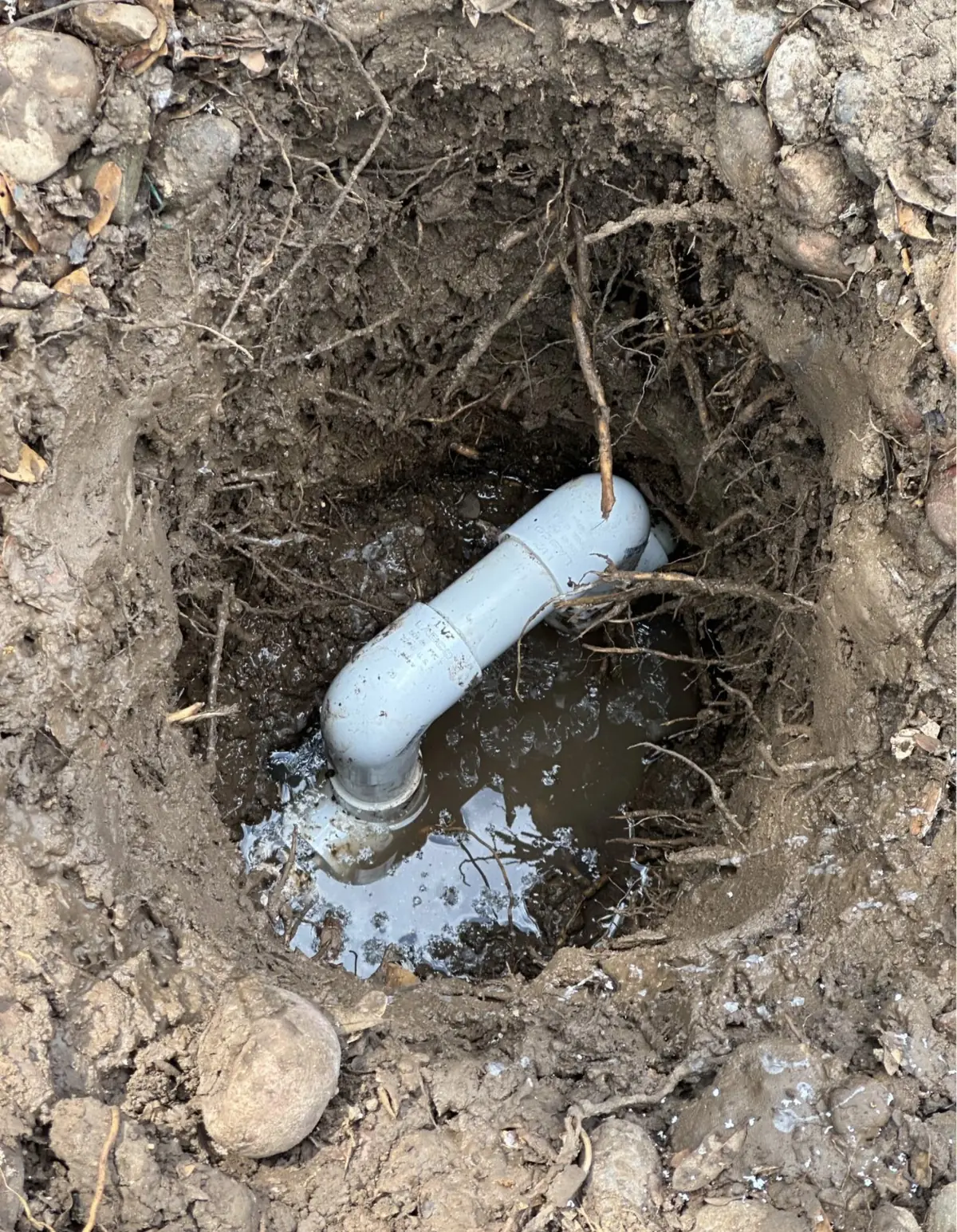
4. Soggy grass or wet spots that never dry
Water from an underground pipe has to go somewhere. Look for a strip of greener grass, mud near the equipment pad, or a spot by the deck that is wet on dry days.
5. New cracks in the plaster, tile or deck
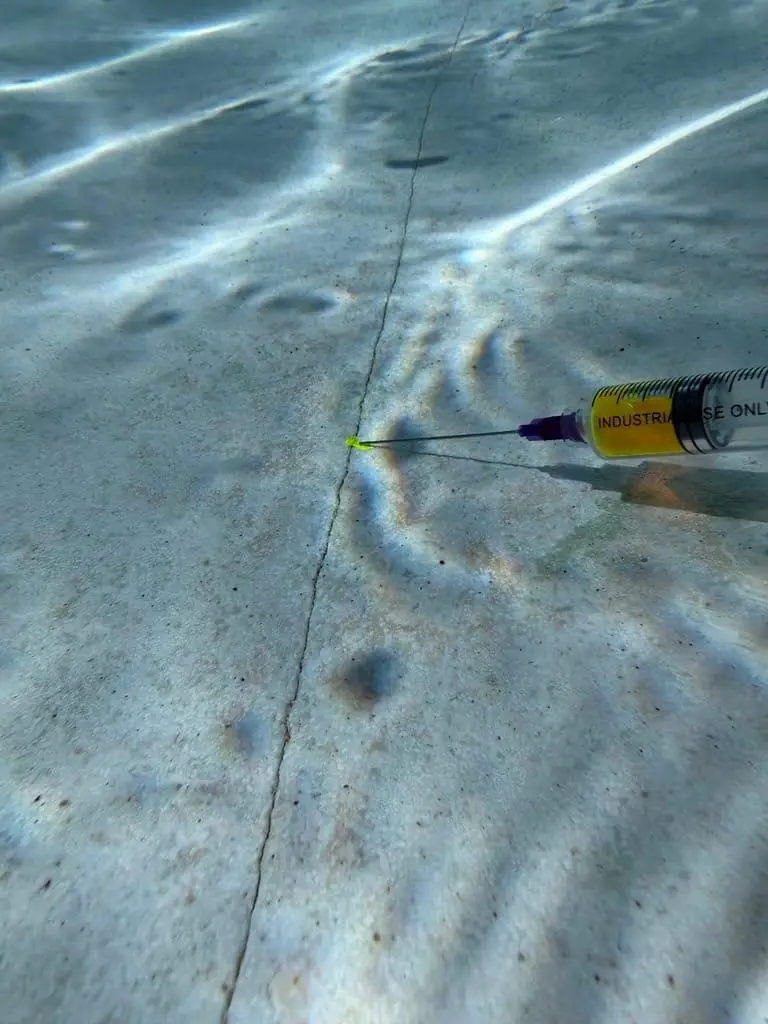
Some cracks are only on the surface. Others go through the shell, or show the ground under the pool is moving. A crack near the waterline or around the skimmer deserves a closer look.
6. The deck is sinking, lifting or pulling away
Water washing out the soil under a deck makes it settle. If a gap opens between the deck and the coping, or a slab tips, a leak may be feeding it.
7. The chemistry never holds
Every gallon of fresh water you add thins out the chlorine, salt and stabilizer. If you keep buying chemicals and algae keeps coming back, lost water can be the reason.
8. Air in the system
Bubbles blowing out of the returns, a pump basket full of air, or a pump that keeps losing prime can mean a leak on the suction side. Where air gets in, water can get out when the pump is off.
9. Water at the equipment pad
Drips at the pump, filter, heater or valves are leaks too. They are often the easiest to find, and sometimes the only one.
Signs that look like a leak but are not
Not every drop is a leak. Splash-out from a busy weekend, a waterfall or sheer descent blowing water onto the deck on a windy day, and backwashing a sand or DE filter all lower the level. So does a long run of hot, dry, windy days. If the drop lines up with one of these and stops when it does, you are probably fine. If it keeps going on calm, quiet days, it is not the weather.
How fast a small leak adds up
A leak that takes an eighth of an inch a day sounds small. In a typical backyard pool that is a few dozen gallons a day, and over a summer it is thousands of gallons, plus the chlorine, salt and heat that leave with it. Water that runs out under a deck or into clay soil also does damage you cannot see until a slab settles or a crack opens. Here is the math for your own pool.
Write it down
A short log makes the leak easier to find. Note how much the water drops each day, whether the pump was running, the weather, and whether the drop stops at a certain level, like the bottom of the skimmer opening or the light. That last clue alone can point straight at the spot. Bring the log to the visit, or text it to us before we come.
What to do first
- Turn off the autofill so you can see the real loss.
- Run a bucket test for 24 hours, once with the pump on and once with it off.
- Do not drain the pool. Most leaks are found with the water in. Here is why.
- Write down what you see, take a few photos, and book a leak detection. The more we know, the better the tech comes prepared.
Questions
How much water loss is normal for a pool?
In a North Texas summer about a quarter inch a day is common from evaporation, a little more on hot, dry, windy days, and much less in winter. Our free leak check compares your drop with the weather where you live.
Can a pool leak fix itself?
No. A leak can slow down when the water drops below it, which is a useful clue, but it does not seal on its own. Soil movement and freezes tend to make it worse.
What does a pool leak look like?
Usually you do not see the leak itself, only what it does: water that drops faster than normal, wet ground or soggy grass, new cracks, a settling deck, or air in the pump. Leaks at the equipment pad are the only ones you can often see dripping.
Should I turn off my pool if it is leaking?
Turn off the autofill, not the whole pool. Keep the pump running on its normal schedule unless the water drops below the skimmer opening, which can let the pump run dry. If it gets that low, turn the pump off and call us.