On this page
What drives evaporation
- Heat and sun. Hot air and direct sun take the most water.
- Wind. Wind carries moist air off the surface and pulls more water up.
- Dry air. Low humidity makes evaporation faster.
- Warm water. A heated pool or a spa loses more than a cool pool.
- Splashing. Waterfalls, deck jets and spillways throw water into the air, and some of it lands on the deck.
What is normal
In a North Texas summer, a quarter inch a day is common, and a little more on hot, dry, windy days. In winter it can be a small fraction of that. That is why a single number never tells the whole story. Our leak check looks up the weather for your ZIP code and estimates the evaporation for your pool on that day.
What that means in gallons
One inch of water over one square foot is about 0.62 gallons. A 16 by 32 foot pool is 512 square feet, so one inch is about 319 gallons. A quarter inch a day of evaporation is about 80 gallons a day. A leak on top of that adds up quickly.
Signs it is not just evaporation
- The pool drops faster than a bucket of pool water set on the step. See the bucket test.
- It keeps dropping in cool, calm, humid weather.
- It stops at the same level every time, such as the bottom of the skimmer or the light.
- It drops faster with the pump on, or faster with it off.
Why Texas pools lose so much in summer
Evaporation is driven by four things at once: water temperature, air temperature, humidity and wind. A North Texas July stacks all four against you: warm water, hot afternoons, dry air and steady wind. A heated pool or spa loses even more, because warm water evaporates faster than cool water. That is why the same pool can drop a quarter inch a day in July and almost nothing in January.
Things that make evaporation look worse
- Waterfalls, sheer descents, bubblers and spillways throw water into the air, which evaporates faster.
- Running the heater or a heat pump through the night.
- A pool in full sun all day with no wind break.
- Splash-out from kids, dogs and pool parties, which is not evaporation at all.
If you see a big drop, think back over the last day or two before you assume the worst. Then test.
A cover, a windbreak and a cooler pool
A solar or safety cover cuts evaporation sharply while it is on. Hedges or a fence on the windy side help. Turning water features off when nobody is out back saves water too. None of this stops a leak; it only makes the difference between the two easier to see.
Still not sure?
Use the free leak check on our site. You enter how much the pool dropped and when, and it compares that with what the weather should take. If the gap is bigger than the weather, it is time for a bucket test or a visit.
Next step
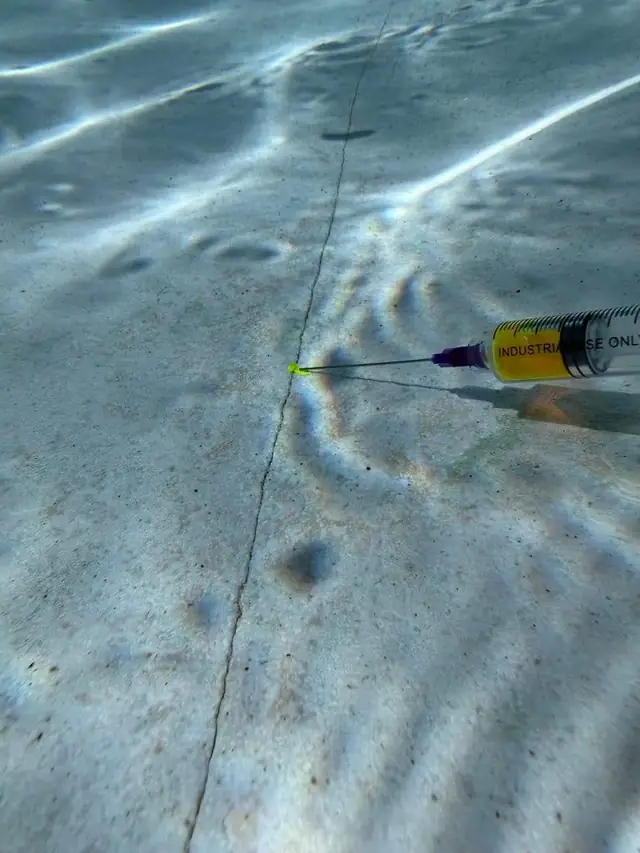
If the numbers do not add up, book a leak detection. We test every line, find the leak, and send you a report with photos and video where available.
Questions
Is losing an inch a day normal for a pool?
Not usually. An inch a day is far more than evaporation in most Texas weather. Run a bucket test to confirm, and turn off the autofill so you can see the true loss.
Does a pool cover stop evaporation?
A solar or safety cover cuts evaporation a lot while it is on. If the pool still drops with the cover on, a leak is more likely.
Does a pool lose more water when the heater is on?
Yes. Warm water evaporates faster, so a heated pool or spa loses more than an unheated one in the same weather, especially on cool, dry nights.
Do water features increase evaporation?
Yes. Waterfalls, sheer descents and fountains spread water into thin sheets and spray, which evaporates faster, and wind can carry some of it onto the deck.