On this page
How a light leaks
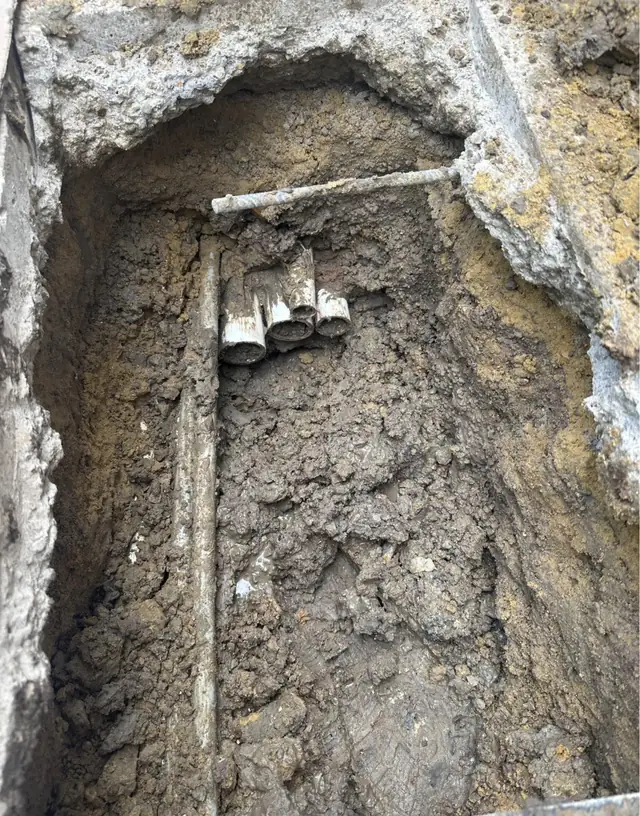
A pool light sits in a housing in the wall called a niche. The power cord runs out the back of the niche through a pipe, the conduit, to a box near the deck. If the seal where the cord enters the conduit fails, pool water follows the cord through the conduit and out into the ground.
The niche itself can also crack, or come loose from the shell.
Signs
- The water stops dropping at the level of the light.
- Water or rust in the junction box by the deck.
- Wet soil near the light side of the pool.
How we find it
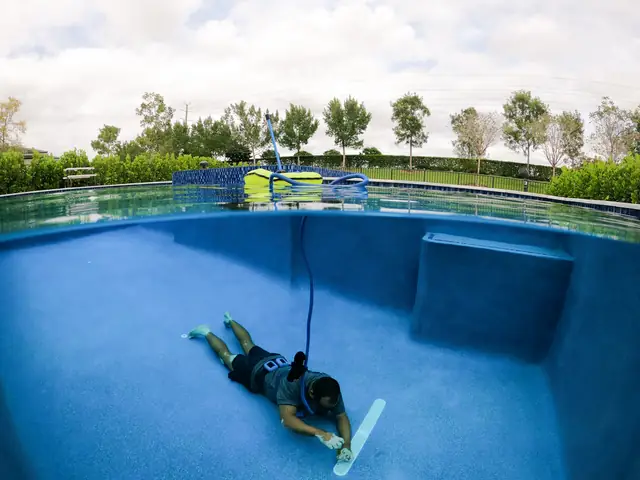
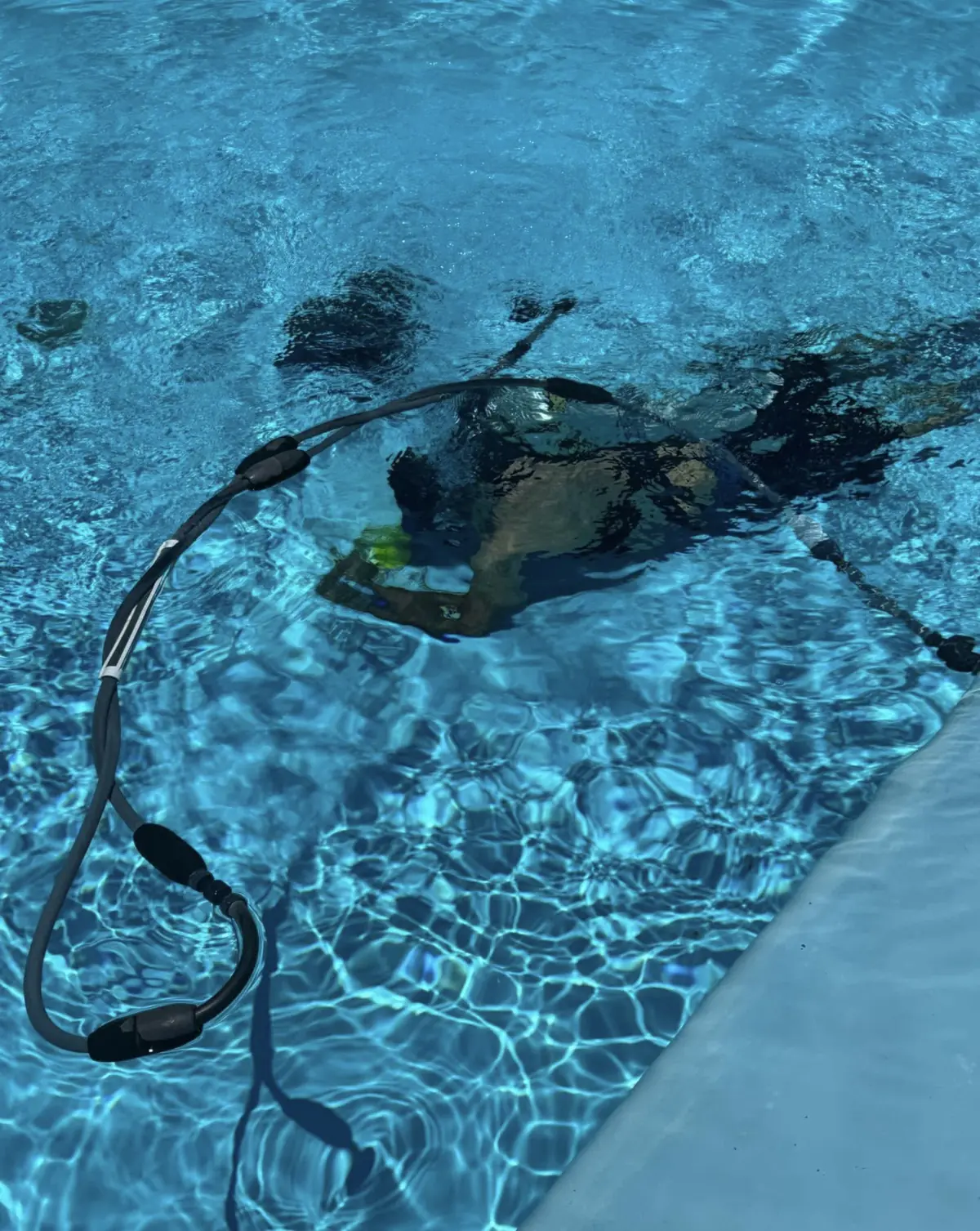
A tech goes under and releases dye at the back of the niche and around the conduit. If it pulls in, we have found it. We also pressure test the conduit when needed.
How it is fixed
Most light leaks are sealed where the cord enters the conduit, at the back of the niche. A cracked niche takes more work and is priced before we start.
What the light niche is
Most in-ground pool lights sit in a niche, a metal or plastic housing set into the wall of the pool. The light fixture screws into the niche, and its cord runs back through a conduit pipe to a junction box or the equipment. The niche is under water, and the conduit is full of water too. If the seal where the cord or conduit enters the niche fails, or the niche cracks from the shell, water finds its way out along the conduit.
Why water stops just above the light
When a light niche leaks, the pool usually drains down to a level a little above the light and then holds there. That level is where the water inside the conduit can no longer push out. If your pool settles at the same level every time, at or near the light, tell us when you book.
What the repair involves
Most light leaks are sealed at the back of the niche, where the conduit enters. The tech takes the fixture out and seals the conduit and the gaps with a putty made for under water. If the niche itself is cracked or rusted through, the repair is bigger and is quoted in the report. Some lights are old enough that replacing the fixture while it is out makes sense; we tell you if so, and it is your call.
LED upgrades and leaks
A new LED light in an old niche does not cause a leak, but the swap is a good time to check the niche and conduit. If you are planning an upgrade, have the light niche tested first so you only open it once.
Leave this one to a pro
Pool lights are electrical. Do not pull a light out of its niche, or open the junction box, yourself. If you suspect a light leak, turn the light off at the breaker and book a leak detection.
Questions
Why does my pool stop losing water at the light?
Because the leak is at that height. Once the water drops below the spot, it has nowhere to escape, so the level holds.
Is a leaking pool light dangerous?
Water in the light circuit is a safety risk. Keep the light off at the breaker until it is checked.
Can I keep using my pool light if it is leaking?
Turn the light off and leave it off until it is checked. Water and pool lights do not mix, and a leak at the niche can be a sign that the fixture seal has failed too.
Is a pool light leak expensive to fix?
Most are sealed at the niche during or soon after the leak detection. A cracked niche or a damaged conduit costs more. You see the price in the report before any work.