On this page
Where liners leak
- Pinholes and tears from sharp objects, toys, pets, or age.
- Around fittings: the skimmer, returns, light and main drain all have faceplates and gaskets that seal the liner.
- Steps and seats, where the liner folds around corners.
- The track at the top, if the liner pulls loose.
Signs
- Wet ground or a soft spot outside the pool wall.
- Wrinkles, or the liner pulling away from the wall or floor.
- Sand or dirt showing through from under the liner.
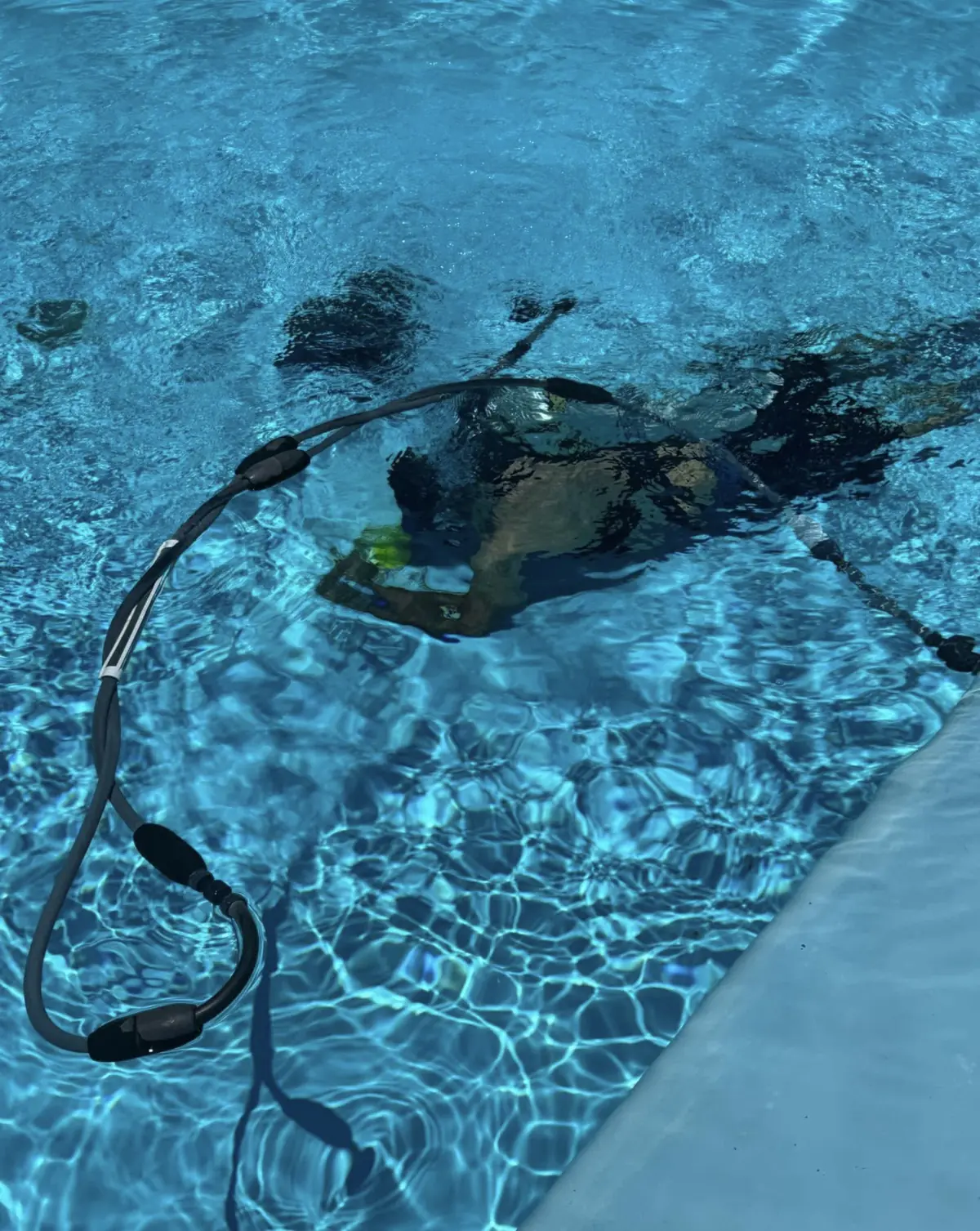
How a liner leak is found
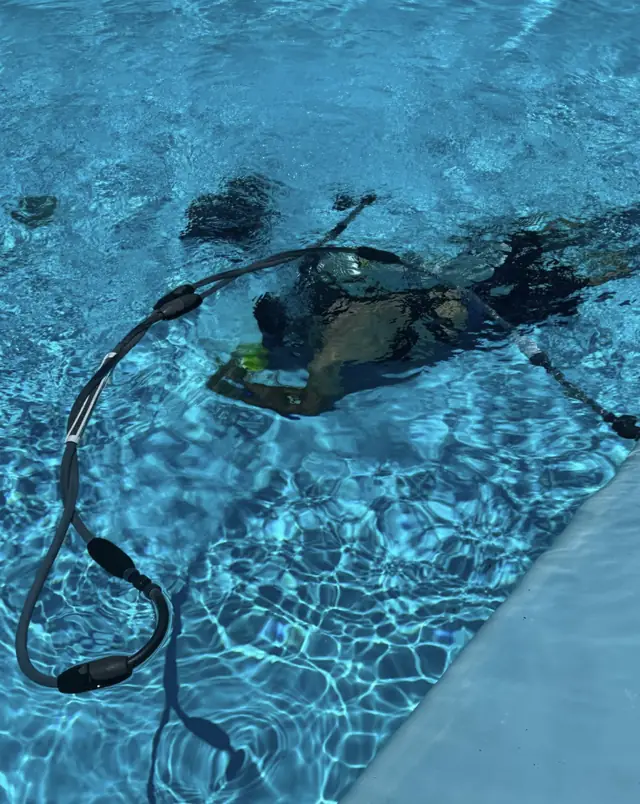
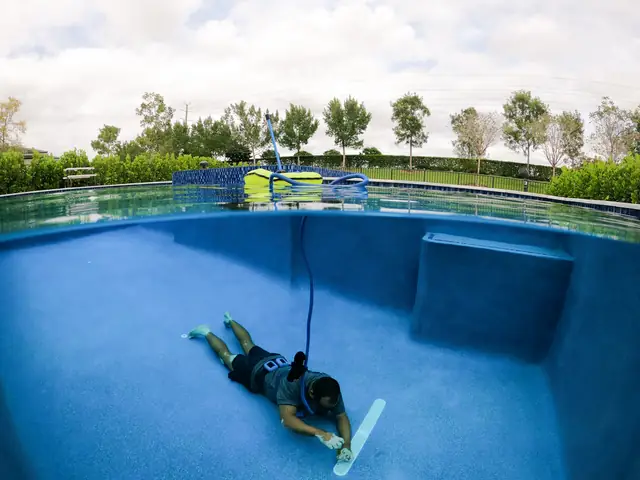
Liner leaks are found slowly and carefully. A tech moves along the liner with dye, paying close attention to every fitting and seam. Once the hole is found, it is often patched under water with a vinyl patch made for pools.
Do not drain a liner pool
A liner can shrink and wrinkle when it is out of the water, and it may not go back into place. Keep the water in, and read why draining is usually a mistake.
Why liners leak where they do
The liner itself is a thin sheet of vinyl, and most leaks are at the places where something cuts through it or rubs on it. The faceplates and gaskets at the skimmer, returns, light and main drain. The steps, where feet and toys scuff. The corners, where the liner is stretched tightest. And near the pool cleaner path, where a cleaner can wear a spot over time.
Patch under water
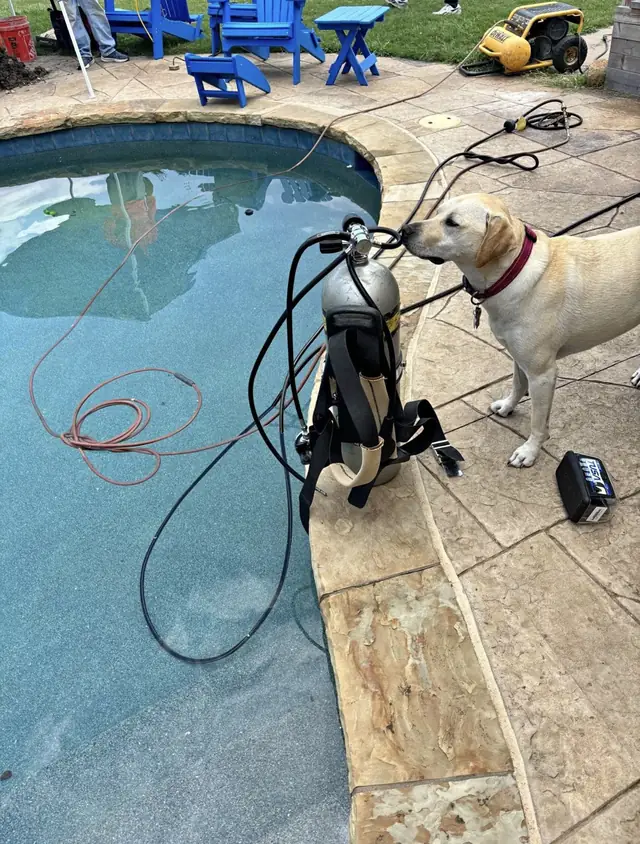
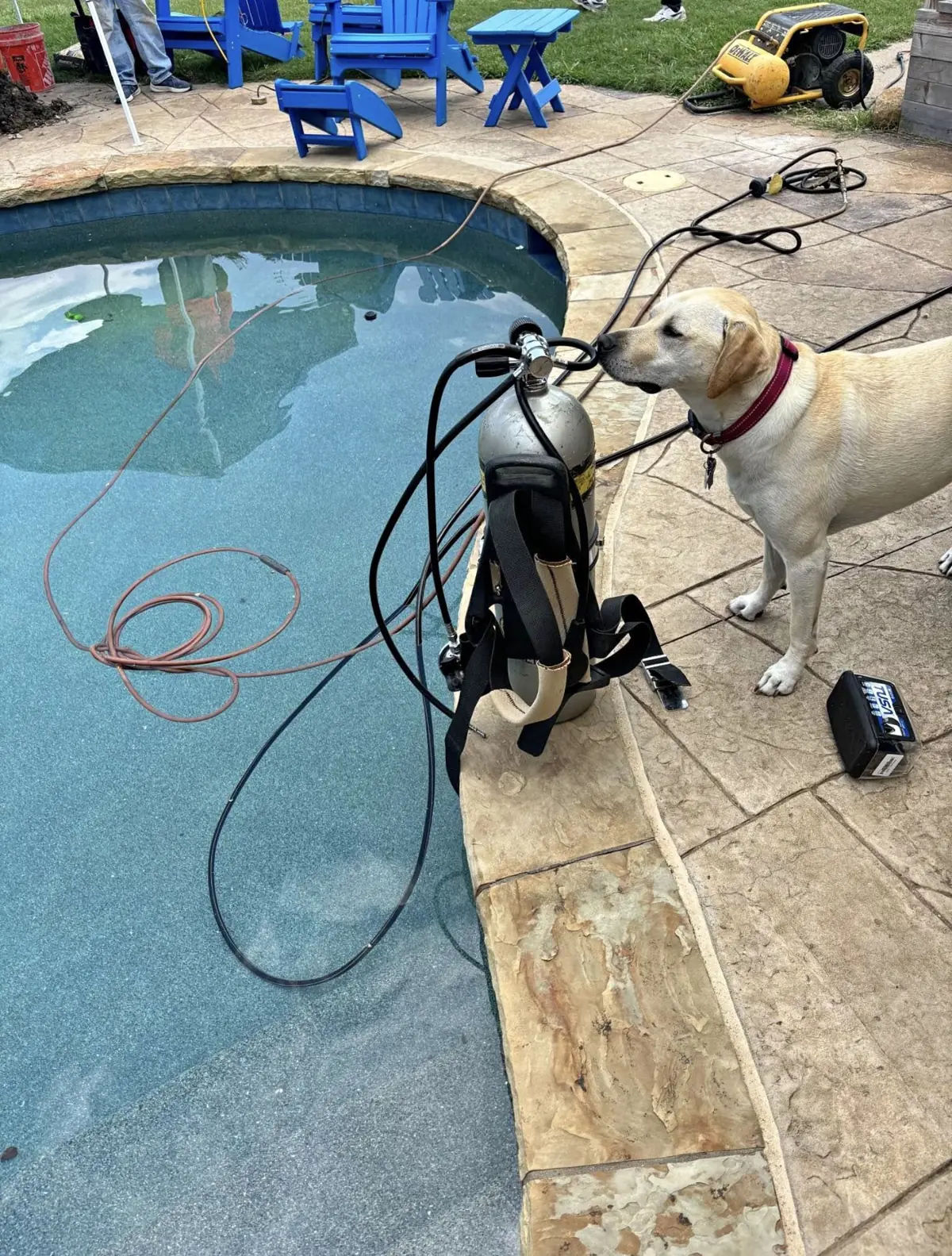
Most small holes and tears are patched with the water in, using a patch made for vinyl that bonds under water. The trick is finding the hole first. With dye and still water, the tech watches for the color to be pulled into the liner, often from inside the pool with dive gear.
Liner age and sun
Vinyl above the water line ages faster in Texas sun. It fades, stiffens and can crack. If your liner is near the end of its life, we tell you in the report, so you can weigh a patch now against replacement later.
Water under the liner
If water from a leak gets behind the liner, it can wash out the sand or base under the floor, and the liner can float or wrinkle. Wrinkles that appear suddenly, or soft spots in the floor, are worth mentioning when you book.
Fittings and gaskets
A worn gasket behind a faceplate is a common, quick fix. We check every fitting on a liner pool during the leak detection.
Questions
Can a vinyl liner be patched under water?
Yes. Small holes and tears are often patched under water with a vinyl patch made for pools.
How do I find a small hole in my pool liner?
Turn the pump off, let the water settle, and release a little dye near suspect spots, especially around fittings and steps. If it pulls into the liner, you have found it.
How long does a vinyl liner last in Texas?
It varies with the liner, the sun, the chemistry and how the pool is used. Sun and high chlorine shorten it. We note the liner condition in the report.
Can a liner leak at the skimmer?
Yes. The skimmer faceplate clamps the liner with gaskets, and old gaskets or loose screws are common leak points on liner pools.